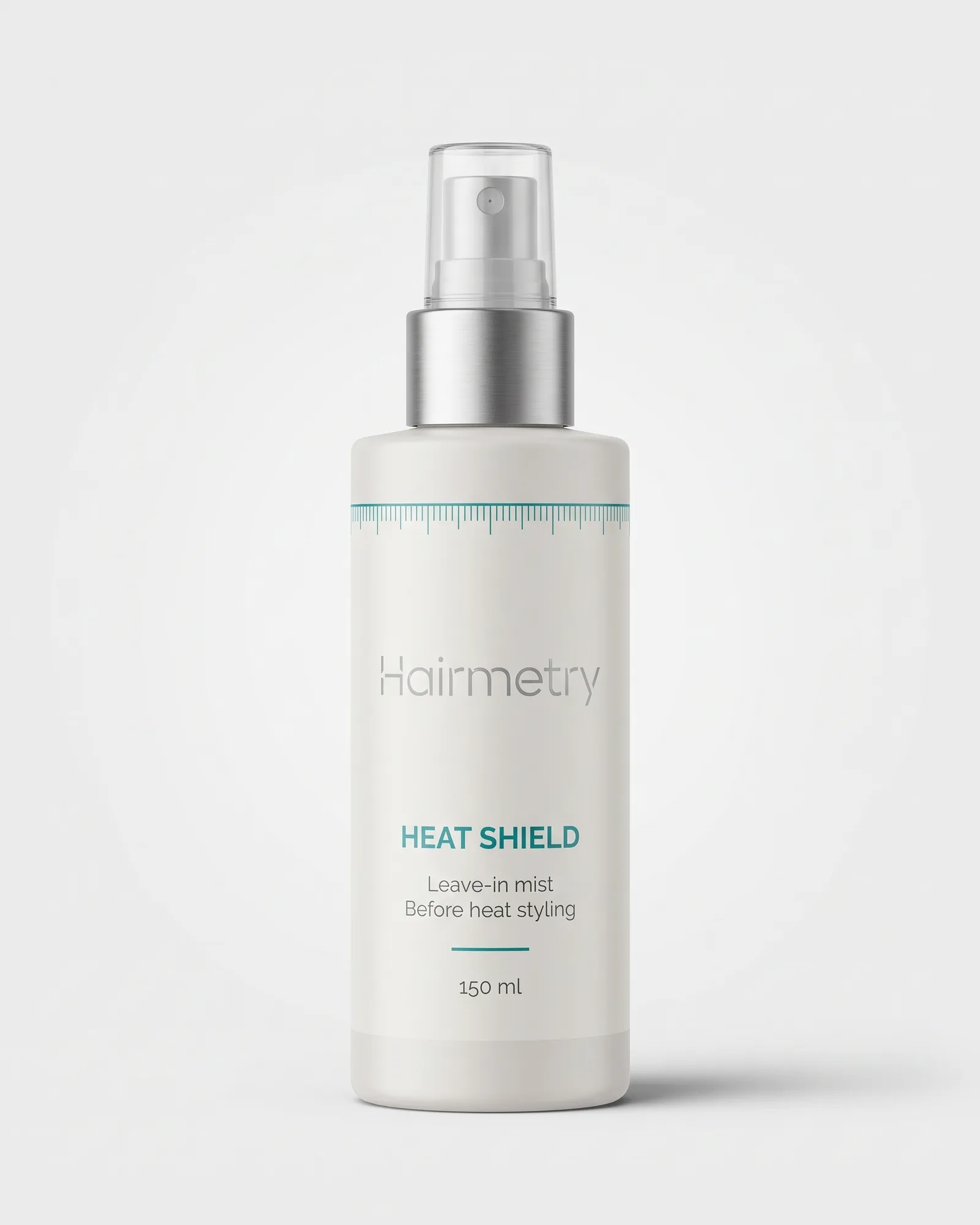
Concept render, product in development
In development · not for sale yet
Hairmetry
Leave-in Heat Shield 150 ml
Leave-in mist to use before blow-drying or hot tools
- straight hair
- wavy hair
- curly hair
- coily hair
- oily scalp
- balanced scalp
- dry scalp
- flaky or itchy scalp
- heat damage
- frizz
- tangles
- breakage
- dullness
Free tester with 2 or more products. Checkout opens at launch.
Prices are set at launch.
- How often
- Before each blow-dry or hot tool
- You notice it
- From the first use
- Every key ingredient links to a study
- No fragrance
Why it works
-
Polyquaternium-55 (film-forming polymer)
Cut combing breakage after repeated flat ironing above 200 C in a 2011 lab test. Supplier-run, on cut hair, and no product can make high heat safe.
-
Amodimethicone (a silicone that sticks to damaged hair)
In a silicone-maker lab test, silicone helped fibres line up under the iron but did not stop keratin denaturing. Keep heat low.
-
Hydrolyzed keratin (wool protein fragments)
studied at 0.5% in a conditioner base
Raised the wet breaking force of heat-straightened hair more than wheat or collagen protein did. Lab study on cut hair.
-
Hydrolyzed wheat protein
studied at 2%, with wheat starch
Gave the highest dry-hair strength gain on heat-straightened hair. Wheat-derived: skip it if you react to wheat.
-
Panthenol (pro-vitamin B5)
A small molecule that enters hair and probably binds to its protein. In a Procter and Gamble lab test it raised break stress and stiffness.
How to use it
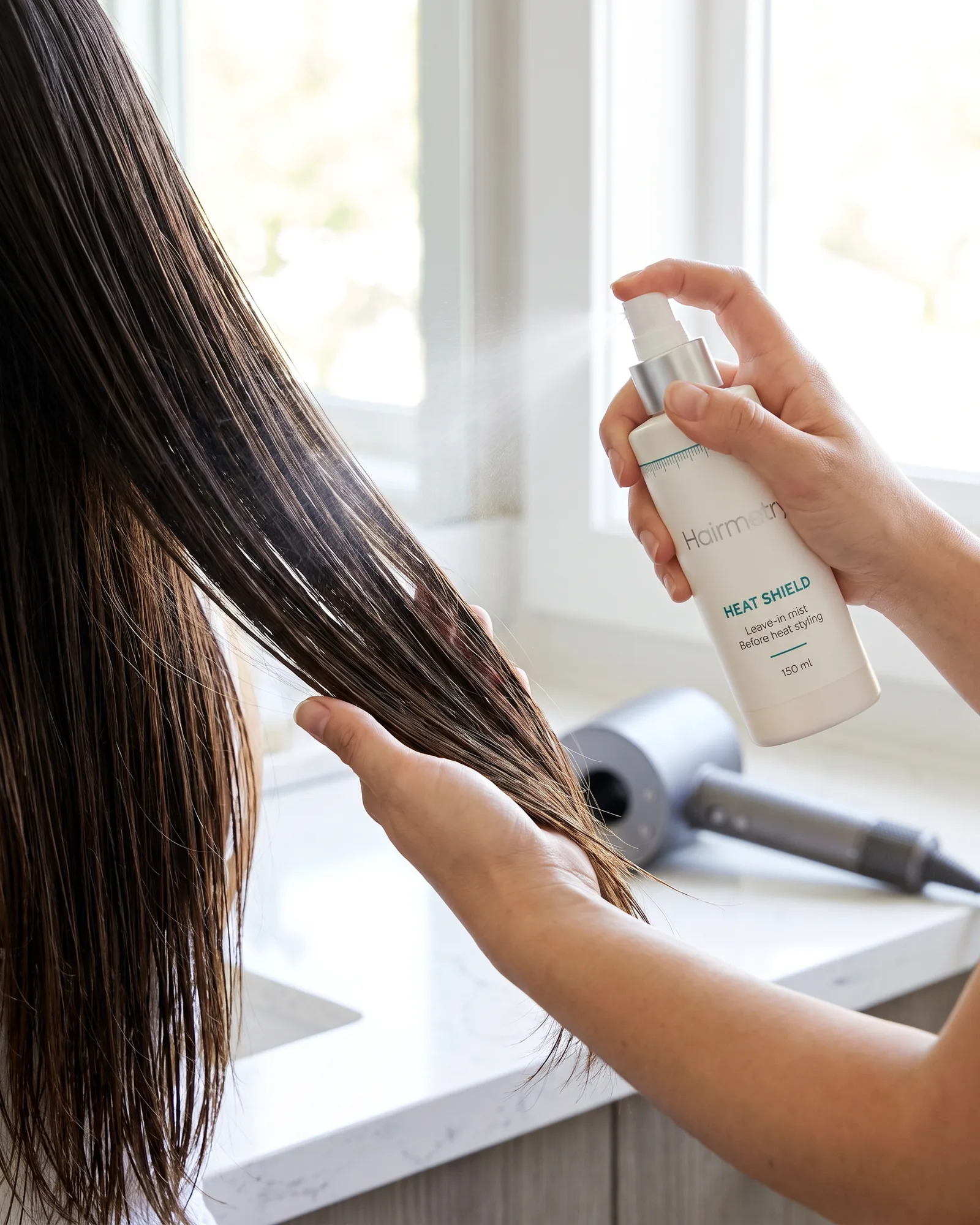
- 1Mist on towel-dried hair from mid-lengths to ends. Comb through.
- 2Dry hair fully before any iron. Never iron damp hair.
What's not in it
Added fragrance and fragrance allergens
Fragrance is a main cause of contact allergy. In one clinic series, 15.7% of dermatitis patients reacted to a fragrance. Linalool and limonene appear in about half of fragranced products.
Essential oils
Natural does not mean gentle. In 62,354 patch-tested clinic patients, 1.4% reacted to an essential oil alone. Ylang-ylang, sandalwood, jasmine, peppermint and oxidised tea tree oil led.
MI / MCI preservatives
MI drove a rise in contact allergy in Europe. EU banned it from leave-ons in 2017; rinse-off is capped at 15 ppm. About 3 in 100 tested patients react.
Formaldehyde-releasing preservatives
These preservatives slowly release formaldehyde, a known skin allergen. A 2022 clinical review says they still cause dermatitis, sometimes without being listed on the label.
Zinc pyrithione
Banned in EU cosmetics from March 2022 as toxic for reproduction (hazard class). EU experts judged it safe in rinse-off anti-dandruff shampoo up to 1%, but no exemption was granted.
Drying alcohol in leave-ons
In 15 volunteers, strong alcohols lowered skin hydration without breaking the barrier. A mild effect, so a caution for dry or sensitive scalps. Fatty alcohols like cetyl alcohol are fine.
Coal tar
Coal tar can cause folliculitis, irritation and allergy, and contains carcinogens seen in animals and workers (patients show no clear tumour rise). A non-tar shampoo matched it in one trial.
Methyldibromo glutaronitrile
A preservative the EU banned in all cosmetics because allergy kept rising. In Denmark, positive allergy tests fell from 4.6% to 2.6% after the ban.
Full ingredient list (proposed formula)
Aqua, Panthenol, Polyquaternium-55, Hydrolyzed Keratin, Hydrolyzed Wheat Protein, Phenoxyethanol, Amodimethicone, Trideceth-12, Cetrimonium Chloride, Ethylhexylglycerin, Citric Acid
A proposed formula for a product in development. Final levels are set by a cosmetic chemist and tested for stability and safety before any sale.
Frequently asked
How often can I use it?
Before each blow-dry or hot tool.
Is it right for my hair type?
It is made for straight, wavy, curly, coily hair. The Best for tags at the top list the scalp types and concerns it suits.
When will I notice a difference?
From the first use.
Does it contain fragrance?
No. It has no added fragrance or essential oils, and the full ingredient list is on this page.
Is it medicine?
No. It is a cosmetic that cares for hair and scalp. It does not treat disease. For hair loss, talk to a doctor.
Can I buy it yet?
Not yet. It is in development, so the formula can still change. Checkout opens at launch.
Leave-in Heat Shield 150 ml
Complete the routine
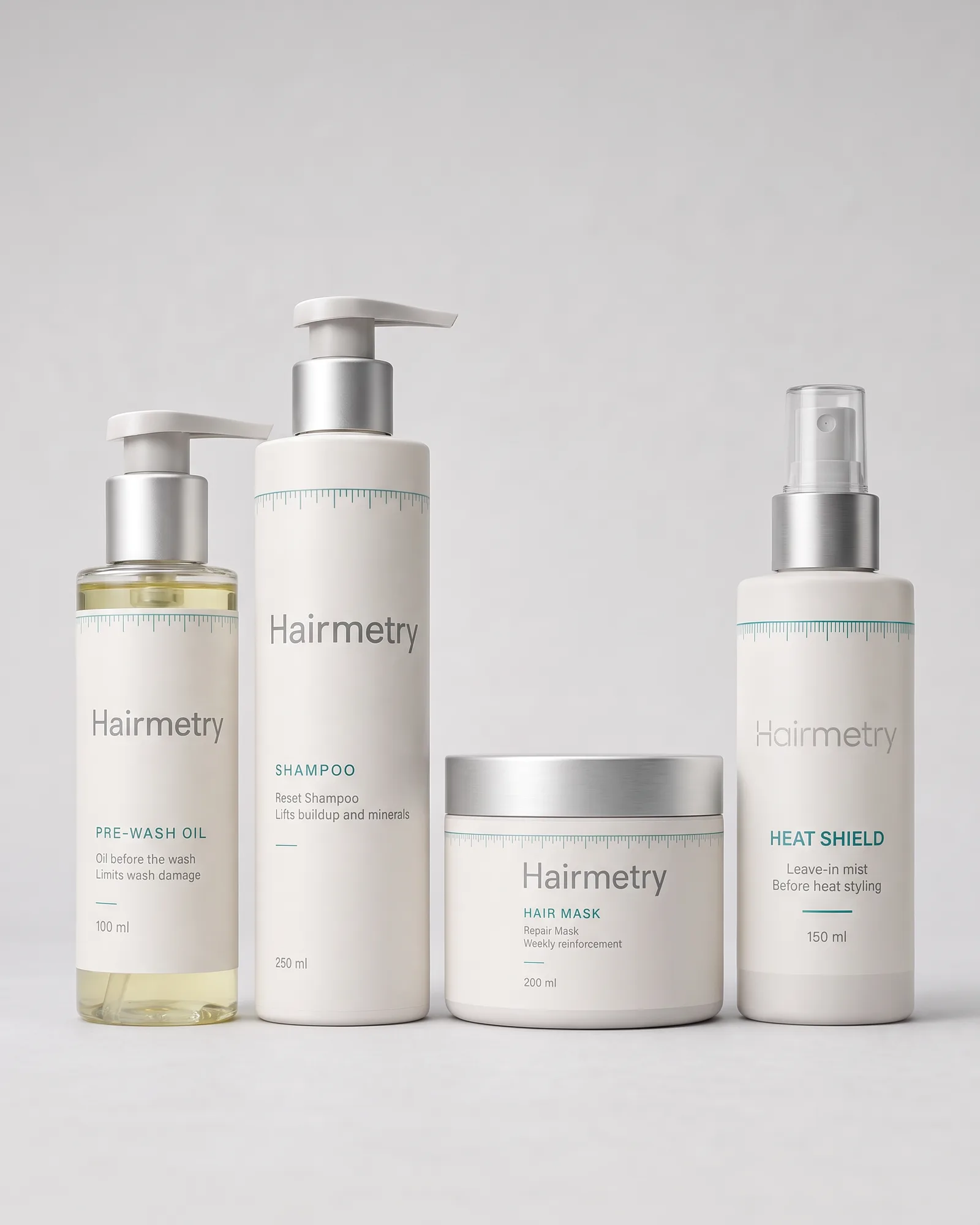
Routine · 4 products
Repair Routine
Pre-wash oil, reset wash, mask and heat protection for worn hair
Oil before the wash, an occasional reset wash, a weekly mask and heat protection before styling.
Save 15% at launch
Sets are cosmetics for hair and scalp. They do not treat disease. For hair loss, talk to a doctor.
Pairs well with
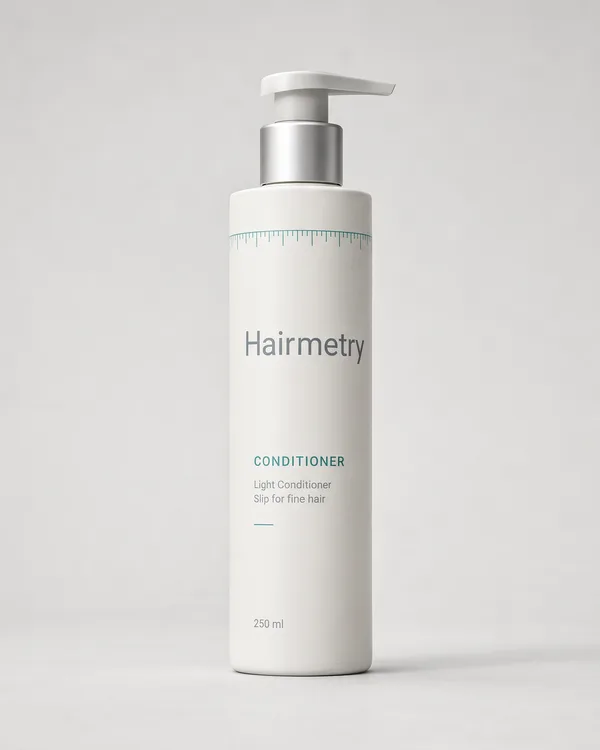
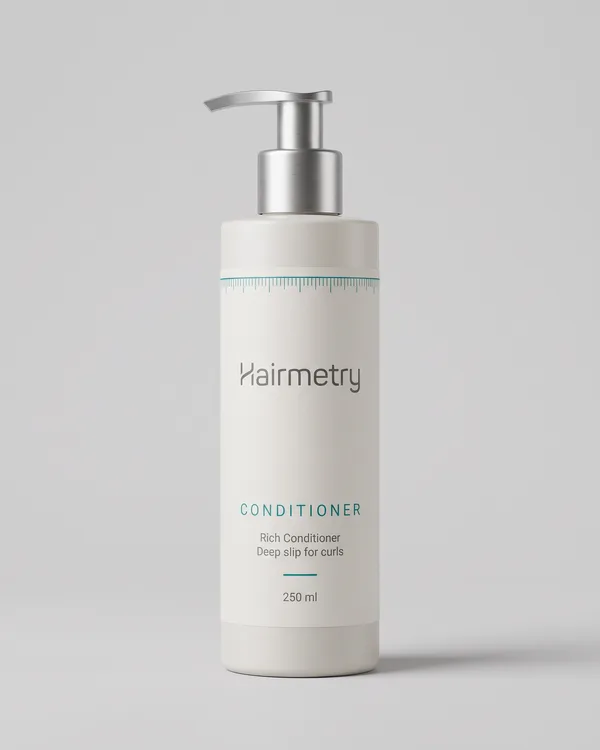
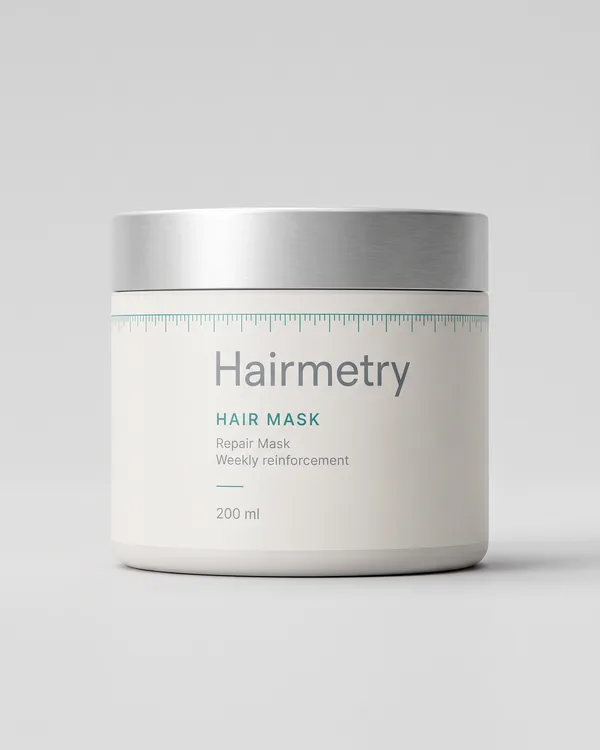
Read more
- Hair damage and repairDamage cannot be healed, only reduced, smoothed or cut off. What bleach, heat, bond builders, oils and trims really do.
- Heat styling without frying your hairHeat damage rises with temperature, time and repeat passes. Dry hair first, go as low as you can, and pass as few times as possible.
- How to dry your hair without damaging itWet hair is about half as stiff as dry hair. Blot, never rub, and keep any heat low, far away and moving.
All studies behind this product (7)
Zhou Y et al. The effect of various cosmetic pretreatments on protecting hair from thermal damage by hot flat ironing. J Cosmet Sci. 2011
Tested: pretreatment with VP/acrylates/lauryl methacrylate copolymer, polyquaternium-55, or a PVM/MA plus polyquaternium-28 complex before ironing
Result: Heat changed the protein structure and raised combing breakage; the three polymer pretreatments cut breakage significantly and protected keratin in the cortex and the cuticle surface.
Read the study ↗Dussaud A, Rana B, Lam HT. Progressive hair straightening using an automated flat iron: function of silicones. J Cosmet Sci. 2013
Tested: silicone treatment before ironing
Result: Silicone did not significantly change how the keratin denatured under repeated ironing, but it improved how evenly the hair straightened, as fibres aligned better under the iron.
Read the study ↗La Torre C, Bhushan B. Nanotribological effects of silicone type, silicone deposition level, and surfactant type on human hair using atomic force microscopy. J Cosmet Sci. 2006
Result: Silicone type, deposition level and the cationic surfactant used all changed nanoscale friction and adhesion of hair.
Read the study ↗Daniels G, Nicholson S, Grant-Ross P, Tamburic S. An ex vivo comparison of the tensile-strengthening properties of protein derivatives on damaged hair. IFSCC Magazine. 2016
Tested: cationic emulsion base (1% cetrimonium chloride) with hydrolysed keratin 0.5%, hydrolysed wheat protein plus wheat starch 2%, or hydrolysed collagen 2%
Result: All three proteins raised wet breaking force on all three damage types, keratin most; wheat protein plus starch gave the biggest gain in dry hair, especially bleached or heat-straightened; small university study, one hair source.
Read the study ↗Burnett C et al. Safety assessment of hydrolyzed wheat protein and hydrolyzed wheat gluten as used in cosmetics. Int J Toxicol. 2018
Result: The Cosmetic Ingredient Review panel judged hydrolysed wheat protein safe in cosmetics when average molecular weight is 3,500 Da or less.
Read the study ↗Marsh JM et al. Strengthening benefits of panthenol for hair: mechanistic evidence from advanced spectroscopic techniques. Int J Cosmet Sci. 2026
Result: Labelled panthenol penetrated into cortical protein regions and raised break stress and elastic modulus, probably through hydrogen bonding.
Read the study ↗Scott LN, Fiume M, Bergfeld WF et al. Safety assessment of panthenol, pantothenic acid, and derivatives as used in cosmetics. Int J Toxicol. 2022
Result: The Cosmetic Ingredient Review panel judged panthenol and pantothenic acid safe as used in cosmetics, where they act as hair conditioners and humectants.
Read the study ↗