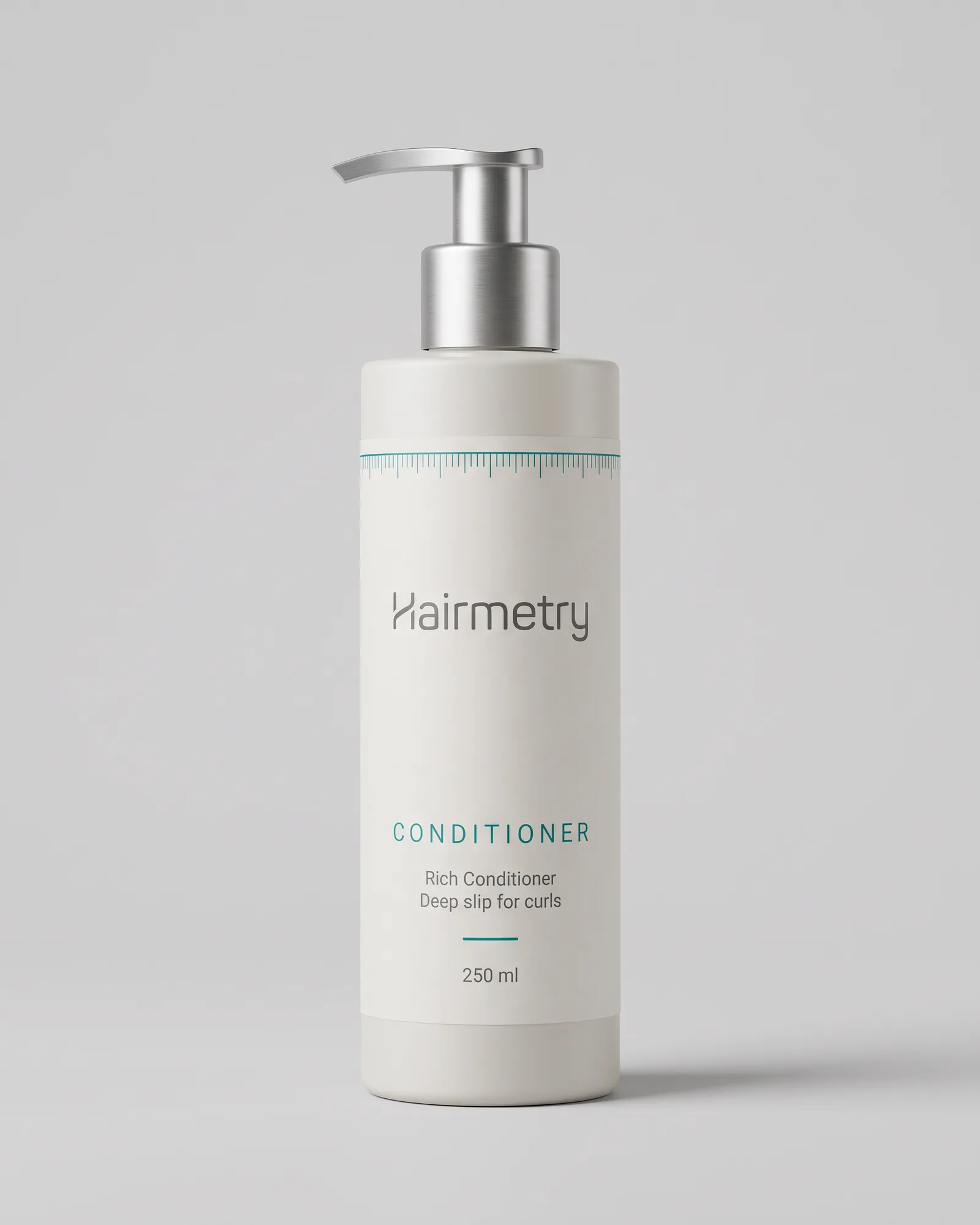
Concept render, product in development
In development · not for sale yet
Hairmetry
Rich Conditioner 250 ml
Deep slip and softness for curly, coily and dry hair
- wavy hair
- curly hair
- coily hair
- dry scalp
- balanced scalp
- flaky or itchy scalp
- dryness
- frizz
- tangles
- breakage
- dullness
- chemical damage
- split ends
Free tester with 2 or more products. Checkout opens at launch.
Prices are set at launch.
- How often
- Every wash
- You notice it
- From the first wash
- Every key ingredient links to a study
- No fragrance
Why it works
-
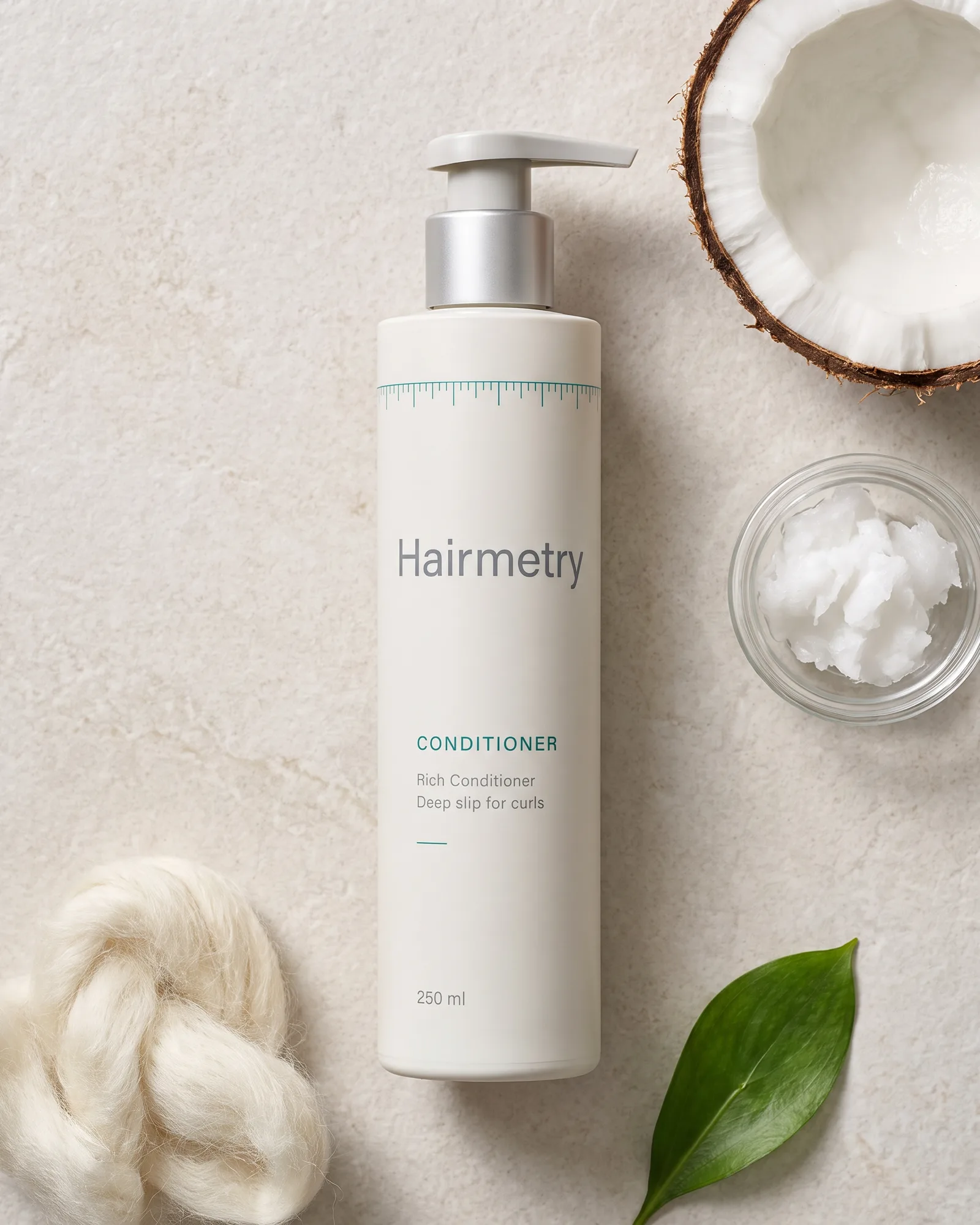
Behentrimonium chloride
Its positive charge is drawn to bleached hair in lab microscopy. In tress tests, wet bleached hair snagged on every comb set and conditioner cut that to under 10%.
-
Cetearyl alcohol (a waxy fatty alcohol, not a drying one)
Builds the thick, creamy gel that carries the conditioner. Lab work found gel strength depends on the conditioner-to-fatty-alcohol ratio, peaking near 6 to 10.
-
Coconut oil
A triglyceride oil that entered hair in lab tests. In industry lab work it cut protein loss when used before or after washing; mineral oil did not.
-
Hydrolyzed keratin (wool protein fragments)
Mid-size and large keratin fragments raised stiffness and cut breakage in relaxed, very curly hair in a lab test.
-
Amodimethicone (a silicone that sticks to damaged hair)
A silicone that coats damaged hair. Reviews credit silicones with cutting friction and adding shine; not tested on curls. Judged safe as used by the CIR panel.
-
Polyquaternium-70 (conditioning polymer)
In a supplier test it gave the best humidity resistance of four conditioning polymers. Tested in shampoo, not conditioner.
How to use it
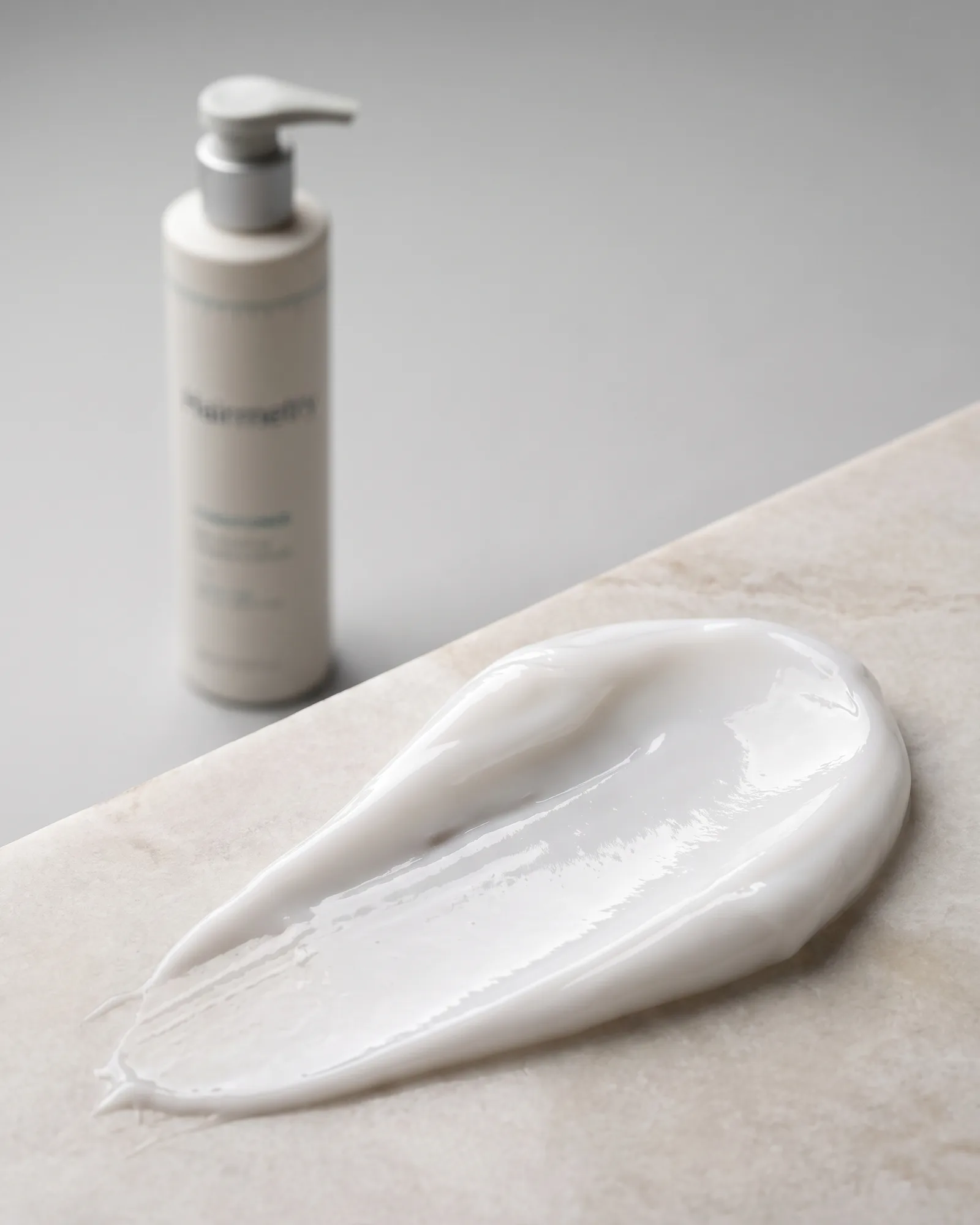
- 1After shampoo, work through mid-lengths and ends with your fingers.
- 2Detangle gently while hair is coated in conditioner, then rinse.
What's not in it
Added fragrance and fragrance allergens
Fragrance is a main cause of contact allergy. In one clinic series, 15.7% of dermatitis patients reacted to a fragrance. Linalool and limonene appear in about half of fragranced products.
Essential oils
Natural does not mean gentle. In 62,354 patch-tested clinic patients, 1.4% reacted to an essential oil alone. Ylang-ylang, sandalwood, jasmine, peppermint and oxidised tea tree oil led.
MI / MCI preservatives
MI drove a rise in contact allergy in Europe. EU banned it from leave-ons in 2017; rinse-off is capped at 15 ppm. About 3 in 100 tested patients react.
Formaldehyde-releasing preservatives
These preservatives slowly release formaldehyde, a known skin allergen. A 2022 clinical review says they still cause dermatitis, sometimes without being listed on the label.
Zinc pyrithione
Banned in EU cosmetics from March 2022 as toxic for reproduction (hazard class). EU experts judged it safe in rinse-off anti-dandruff shampoo up to 1%, but no exemption was granted.
Harsh sulfates in daily products
SLS is the standard irritant control in skin patch tests. A gentler cleanser, sodium lauroyl glutamate, irritated far less in 15 people. Fine for an occasional deep clean, not daily.
Coal tar
Coal tar can cause folliculitis, irritation and allergy, and contains carcinogens seen in animals and workers (patients show no clear tumour rise). A non-tar shampoo matched it in one trial.
Methyldibromo glutaronitrile
A preservative the EU banned in all cosmetics because allergy kept rising. In Denmark, positive allergy tests fell from 4.6% to 2.6% after the ban.
Full ingredient list (proposed formula)
Aqua, Cetearyl Alcohol, Behentrimonium Chloride, Behenyl Alcohol, Cocos Nucifera Oil, Camellia Oleifera Seed Oil, Panthenol, Phenoxyethanol, Hydrolyzed Keratin, Amodimethicone, Trideceth-12, Cetrimonium Chloride, Polyquaternium-70, Ceramide NP, Ethylhexylglycerin, Tocopherol, Citric Acid
A proposed formula for a product in development. Final levels are set by a cosmetic chemist and tested for stability and safety before any sale.
Frequently asked
How often can I use it?
Every wash.
Is it right for my hair type?
It is made for wavy, curly, coily hair. The Best for tags at the top list the scalp types and concerns it suits.
When will I notice a difference?
From the first wash.
Does it contain fragrance?
No. It has no added fragrance or essential oils, and the full ingredient list is on this page.
Is it medicine?
No. It is a cosmetic that cares for hair and scalp. It does not treat disease. For hair loss, talk to a doctor.
Can I buy it yet?
Not yet. It is in development, so the formula can still change. Checkout opens at launch.
Rich Conditioner 250 ml
Complete the routine
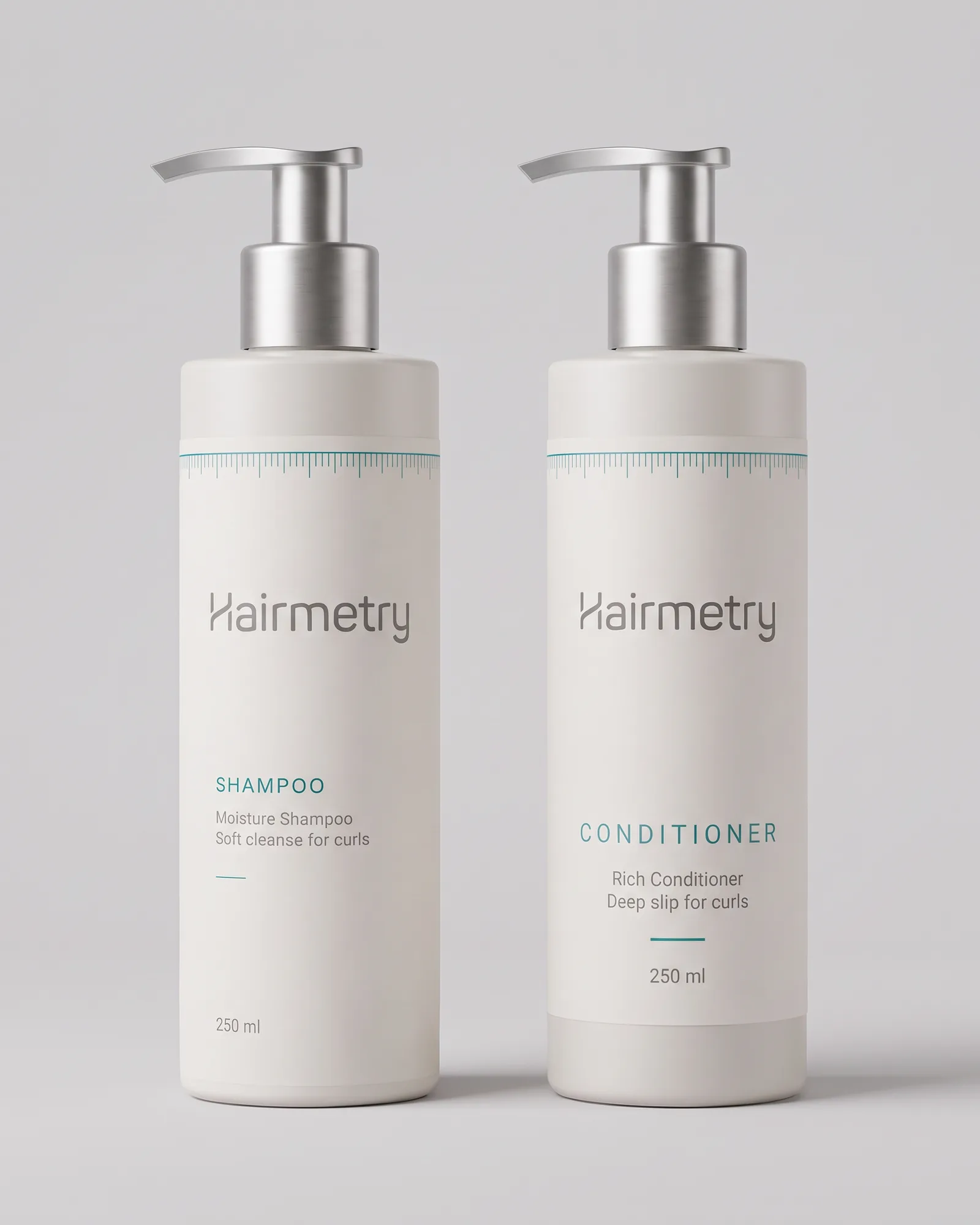
Duo · 2 products
Shower Duo, Moisture
Moisture Shampoo and Rich Conditioner for wavy, curly and coily hair
A soft cleanse followed by a richer conditioner, for hair that dries out and tangles more easily.
Save 10% at launch
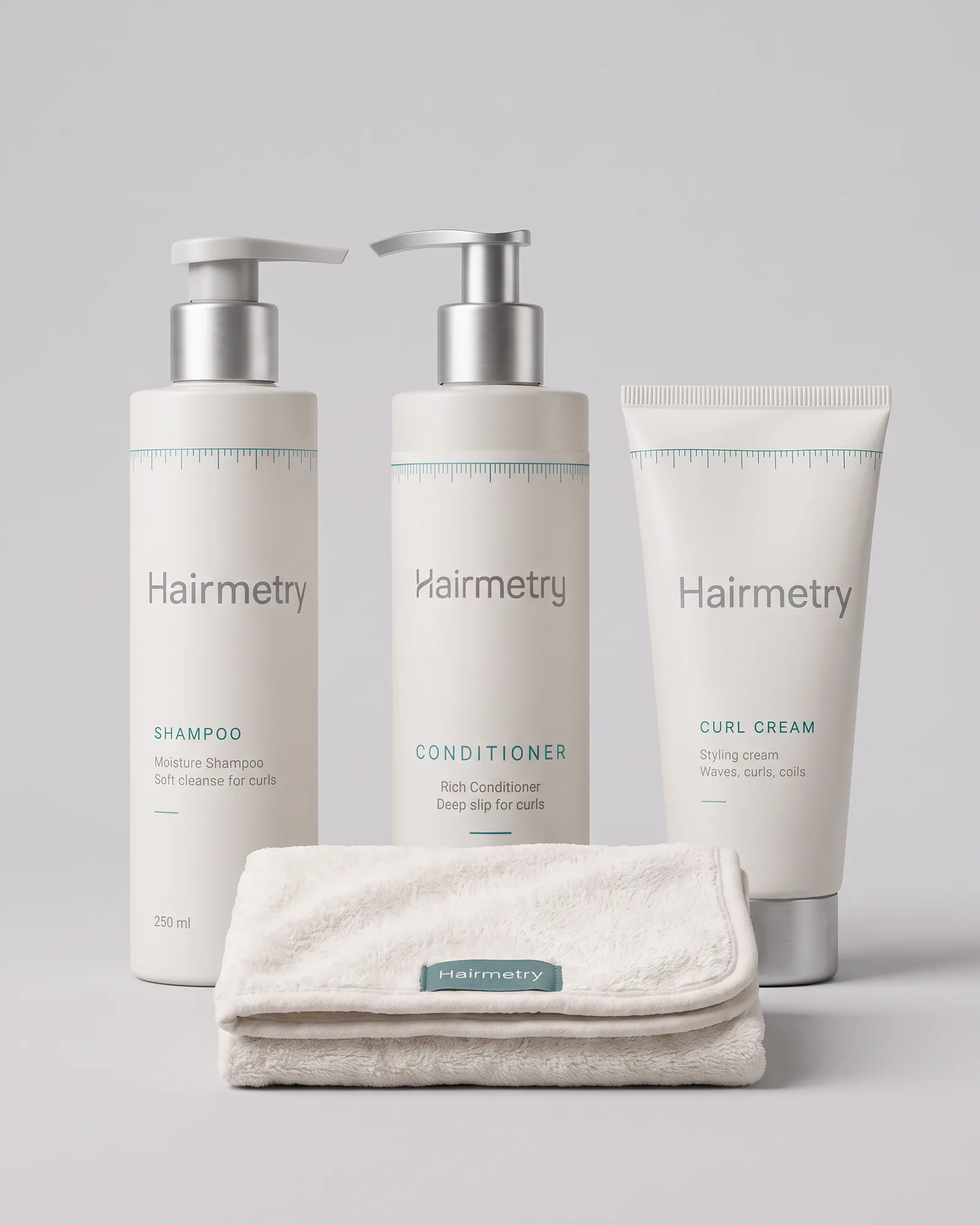
Routine · 4 products
Curl Routine
Wash, condition, define and dry gently, for wavy to coily hair
The four steps of a curl routine in the order you use them: cleanse, condition, define, then blot instead of rub.
Save 15% at launch
Sets are cosmetics for hair and scalp. They do not treat disease. For hair loss, talk to a doctor.
Pairs well with
Read more
- How to brush and detangle your hairMost breakage comes from knots, not the comb. Add conditioner, start at the ends, and use a wide-tooth comb.
- How to use conditioner properlyConditioner makes hair slippery so it snags and breaks less. Use it on lengths and ends, not the scalp.
- Curly and wavy hair care, simplyWash the scalp, condition the lengths, handle curls wet, and let gel set. A short routine for waves, curls and coils.
- Hair damage and repairDamage cannot be healed, only reduced, smoothed or cut off. What bleach, heat, bond builders, oils and trims really do.
All studies behind this product (13)
Tham HP et al. Electrokinetic analysis reveals common conditioner ingredient interactions with human hair. Int J Cosmet Sci. 2026
Tested: behentrimonium chloride and methosulfate, cetrimonium chloride, stearalkonium chloride
Result: Longer-chain behentrimonium chloride cut wet combing force and deposited best; none reversed oxidative damage.
Read the study ↗Labarre L et al. Hair surface interactions against different chemical functional groups as a function of environment and hair condition. Int J Cosmet Sci. 2023
Result: Hydrophobic interaction drove deposition on virgin hair and electrostatic interaction on bleached hair.
Read the study ↗New S et al. Measuring the frequency of consumer hair combing and magnitude of combing forces on individual hairs in a tress and the implications for product evaluation and claims substantiation. 2018
Result: Women combed about 16 strokes a day; wet bleached hair snagged every time and conditioner cut that to under 10%.
Read the study ↗Commission Regulation (EU) No 866/2014 amending Annexes III, V and VI to Regulation (EC) No 1223/2009 (cosmetic products)
Result: Behentrimonium chloride is capped at 5.0% in rinse-off and 3.0% in leave-on hair products; cetrimonium chloride at 2.5% rinse-off and 1.0% leave-on; the sum of the three must stay under the stated cap because mixtures can irritate.
Read the study ↗Davies AR, Amin S. Microstructure design of CTAC:FA and BTAC:FA lamellar gels using an automated formulation platform. Int J Cosmet Sci. 2020
Result: Gel structure strength was highest for behentrimonium systems, peaking at a surfactant to fatty alcohol ratio of 6:10, and it affected wet combing.
Read the study ↗Rele AS, Mohile RB. Effect of mineral oil, sunflower oil, and coconut oil on prevention of hair damage. J Cosmet Sci. 2003
Tested: mineral, sunflower and coconut oil
Result: Mineral oil did not reduce protein loss from combing in either undamaged or damaged hair; coconut oil did.
Read the study ↗Ruetsch SB et al. SIMS investigation of penetration of coconut and mineral oils into human hair fibers. J Cosmet Sci. 2001
Tested: coconut oil vs mineral oil
Result: Coconut oil penetrated the hair fibre; mineral oil did not.
Read the study ↗Malinauskyte E et al. Penetration of different molecular weight hydrolysed keratins into hair fibres and their effects on the physical properties of textured hair. Int J Cosmet Sci. 2021
Tested: single-fibre tensile and thermal tests after peptide treatment
Result: Small and mid-size peptides entered the cortex, the biggest stayed on the surface; mid and large keratin peptides raised stiffness and cut breakage at 20% and 80% humidity.
Read the study ↗Daniels G, Nicholson S, Grant-Ross P, Tamburic S. An ex vivo comparison of the tensile-strengthening properties of protein derivatives on damaged hair. IFSCC Magazine. 2016
Tested: cationic emulsion base (1% cetrimonium chloride) with hydrolysed keratin 0.5%, hydrolysed wheat protein plus wheat starch 2%, or hydrolysed collagen 2%
Result: All three proteins raised wet breaking force on all three damage types, keratin most; wheat protein plus starch gave the biggest gain in dry hair, especially bleached or heat-straightened; small university study, one hair source.
Read the study ↗La Torre C, Bhushan B. Nanotribological effects of silicone type, silicone deposition level, and surfactant type on human hair using atomic force microscopy. J Cosmet Sci. 2006
Result: Silicone type, deposition level and the cationic surfactant used all changed nanoscale friction and adhesion of hair.
Read the study ↗Carvalho RM, Melo DF, Kelati A, Tosti A. With or without silicones? A comprehensive review of their role in hair care. Skin Appendage Disord. 2025
Tested: silicones in hair care
Result: Silicones reduce friction, prevent moisture loss and add shine and heat protection, with build-up concerns for water-insoluble types; newer water-dispersible forms exist.
Read the study ↗Nair B, Cosmetic Ingredient Review Expert Panel. Final report on the safety assessment of stearoxy dimethicone, dimethicone, methicone, amino bispropyl dimethicone, aminopropyl dimethicone, amodimethicone, and related silicones. Int J Toxicol. 2003
Result: The panel judged dimethicone and the amino-silicones safe as used in cosmetics, with minimal absorption.
Read the study ↗Gao T. Evaluation of hair humidity resistance/moisturization from hair elasticity. J Cosmet Sci. 2007
Result: Hair frizz was measured by photographing tresses at controlled humidity; naturally curly and kinky hair was the frizziest.
Read the study ↗