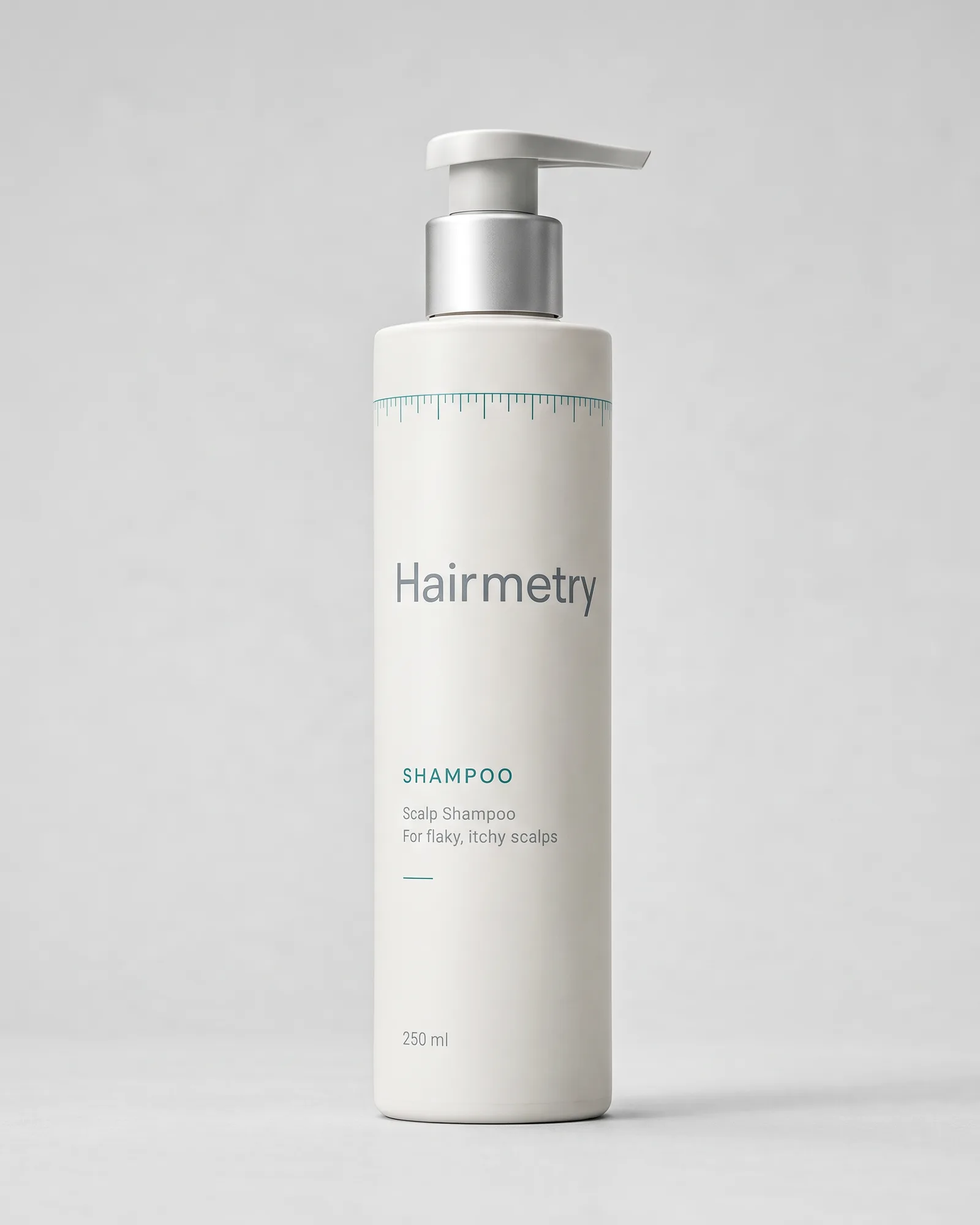
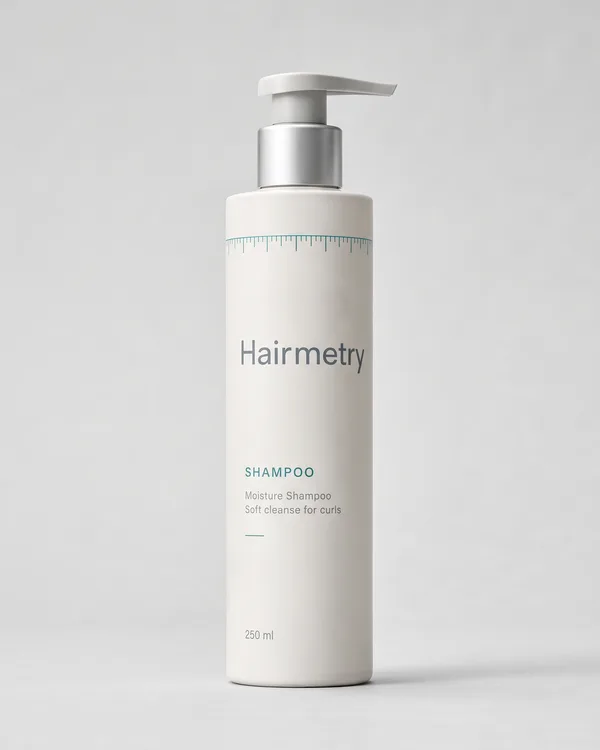
Concept render, product in development
In development · not for sale yet
Hairmetry
Scalp Shampoo 250 ml
Helps reduce flakes and itch on flaky, oily scalps
- straight hair
- wavy hair
- curly hair
- coily hair
- flaky or itchy scalp
- oily scalp
- dandruff
- itchy scalp
- shedding
Free tester with 2 or more products. Checkout opens at launch.
Prices are set at launch.
- How often
- 2 to 3 times a week
- You notice it
- Fewer flakes within about 4 weeks
- Every key ingredient links to a study
- No fragrance
Why it works
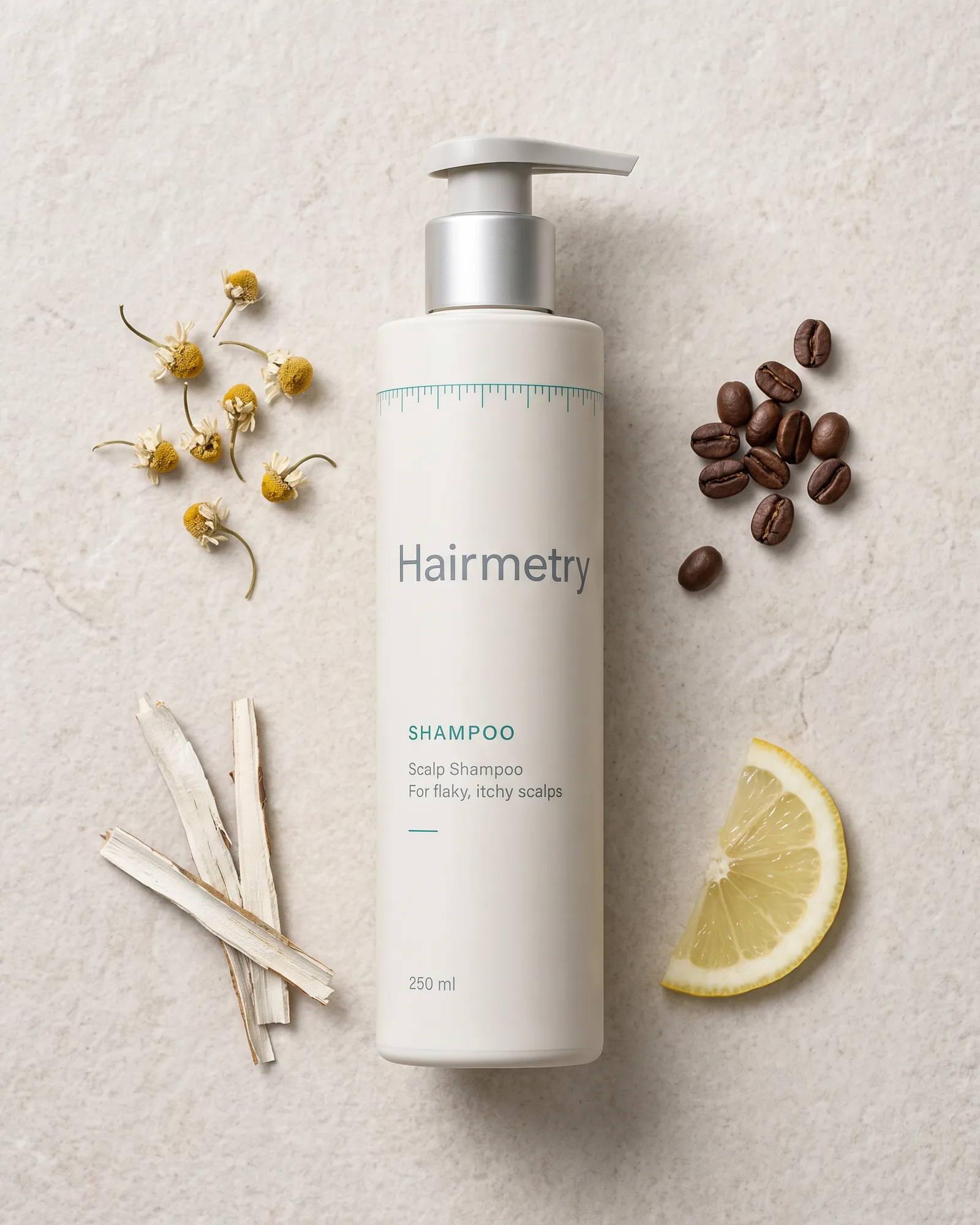
-
Piroctone olamine (anti-dandruff active)
studied at 0.5 to 1%
Cleared itch and flakes in trials and cut Malassezia yeast counts. In 150 men over 6 months, a 1% shampoo cut shedding 16.5%; density was unchanged.
-
Salicylic acid (flake loosener)
studied at 2%
A flake-loosening acid. Paired with sulfur, it cut scaling earlier and further than plain base in 48 people; with piroctone it was tested in 19.
-
Caffeine
studied at 0.4%
Entered skin via hair follicles within 2 minutes of a shampoo. In 77 people, a caffeine and adenosine shampoo raised hair density versus baseline over about 3 months.
-
Adenosine
studied at 0.2%
Paired with caffeine in the same 77-person shampoo trial; hair loss fell, though hair thickness did not change. Company-linked, small, single-blind.
-
Bisabolol (chamomile calmer)
Part of a perfume-free, very mild shampoo that cut redness and scabs on a sensitive scalp after hair transplant. The effect belongs to the whole formula.
-
Betaine
Lowered detergent irritation in a 21-person forearm patch test. Not tested on flaky scalps; here as a gentle precaution.
How to use it
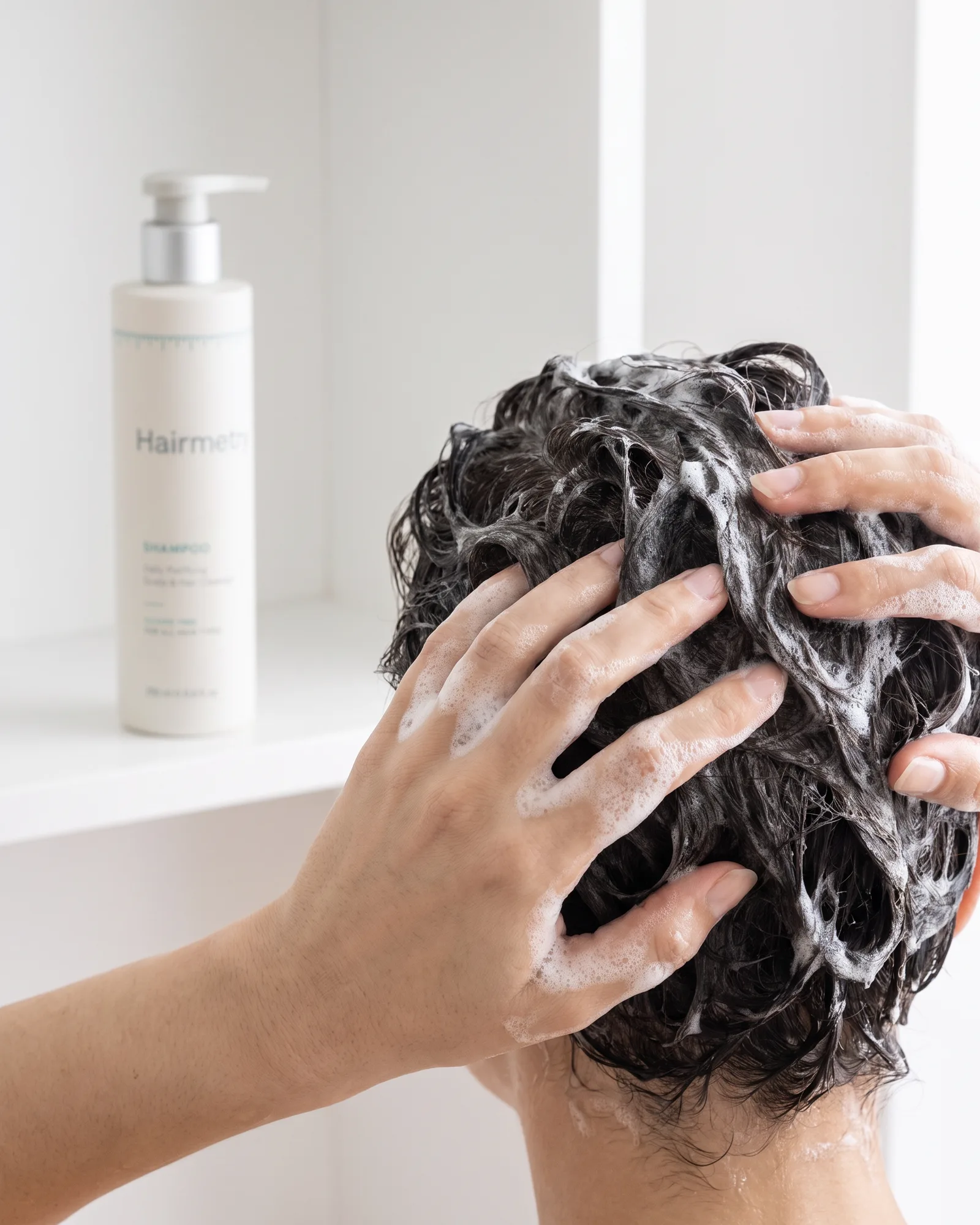
- 1Massage into a wet scalp. Leave on for 2 to 3 minutes.
- 2Rinse well. Keep out of eyes. Not for children under 3.
What's not in it
Added fragrance and fragrance allergens
Fragrance is a main cause of contact allergy. In one clinic series, 15.7% of dermatitis patients reacted to a fragrance. Linalool and limonene appear in about half of fragranced products.
Essential oils
Natural does not mean gentle. In 62,354 patch-tested clinic patients, 1.4% reacted to an essential oil alone. Ylang-ylang, sandalwood, jasmine, peppermint and oxidised tea tree oil led.
MI / MCI preservatives
MI drove a rise in contact allergy in Europe. EU banned it from leave-ons in 2017; rinse-off is capped at 15 ppm. About 3 in 100 tested patients react.
Formaldehyde-releasing preservatives
These preservatives slowly release formaldehyde, a known skin allergen. A 2022 clinical review says they still cause dermatitis, sometimes without being listed on the label.
Zinc pyrithione
Banned in EU cosmetics from March 2022 as toxic for reproduction (hazard class). EU experts judged it safe in rinse-off anti-dandruff shampoo up to 1%, but no exemption was granted.
Harsh sulfates in daily products
SLS is the standard irritant control in skin patch tests. A gentler cleanser, sodium lauroyl glutamate, irritated far less in 15 people. Fine for an occasional deep clean, not daily.
Drying alcohol in leave-ons
In 15 volunteers, strong alcohols lowered skin hydration without breaking the barrier. A mild effect, so a caution for dry or sensitive scalps. Fatty alcohols like cetyl alcohol are fine.
Coal tar
Coal tar can cause folliculitis, irritation and allergy, and contains carcinogens seen in animals and workers (patients show no clear tumour rise). A non-tar shampoo matched it in one trial.
Methyldibromo glutaronitrile
A preservative the EU banned in all cosmetics because allergy kept rising. In Denmark, positive allergy tests fell from 4.6% to 2.6% after the ban.
Full ingredient list (proposed formula)
Aqua, Sodium Lauroyl Methyl Isethionate, Disodium Cocoamphodiacetate, Sodium Cocoyl Glutamate, Salicylic Acid, Propanediol, Glycerin, Piroctone Olamine, Betaine, Panthenol, Caffeine, Guar Hydroxypropyltrimonium Chloride, Adenosine, Bisabolol, Sodium Chloride, Tetrasodium Glutamate Diacetate, Phenoxyethanol, Ethylhexylglycerin, Citric Acid, Sodium Hydroxide
A proposed formula for a product in development. Final levels are set by a cosmetic chemist and tested for stability and safety before any sale.
Frequently asked
How often can I use it?
2 to 3 times a week.
Is it right for my hair type?
It is made for straight, wavy, curly, coily hair. The Best for tags at the top list the scalp types and concerns it suits.
When will I notice a difference?
Fewer flakes within about 4 weeks.
Does it contain fragrance?
No. It has no added fragrance or essential oils, and the full ingredient list is on this page.
Is it medicine?
No. It is a cosmetic that cares for hair and scalp. It does not treat disease. For hair loss, talk to a doctor.
Can I buy it yet?
Not yet. It is in development, so the formula can still change. Checkout opens at launch.
Scalp Shampoo 250 ml
Complete the routine
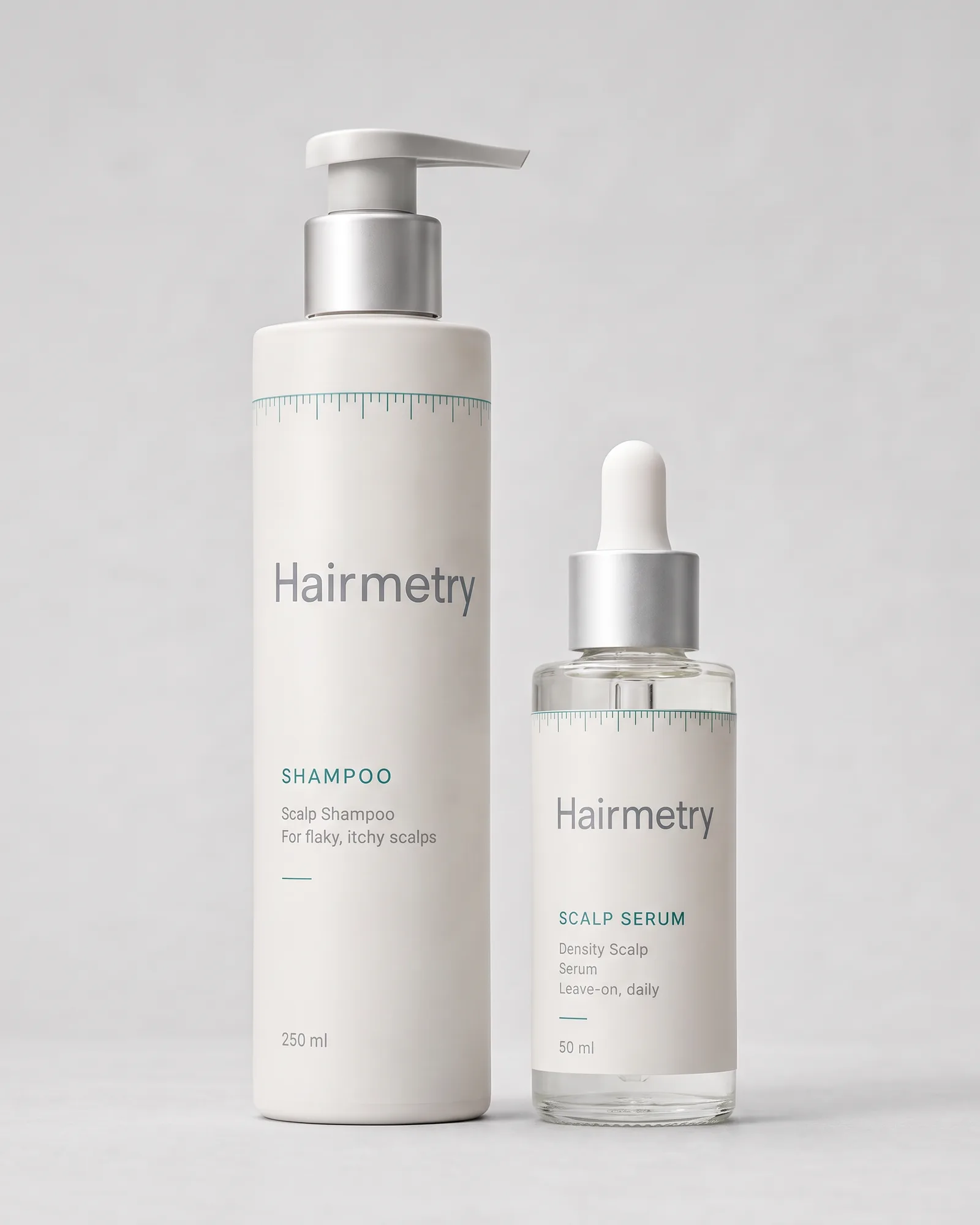
Duo · 2 products
Scalp Duo
Scalp Shampoo and Density Serum for a well-kept scalp
A cosmetic scalp wash and a leave-on serum for scalp care. Neither treats hair loss; for hair loss, talk to a doctor.
Save 10% at launch
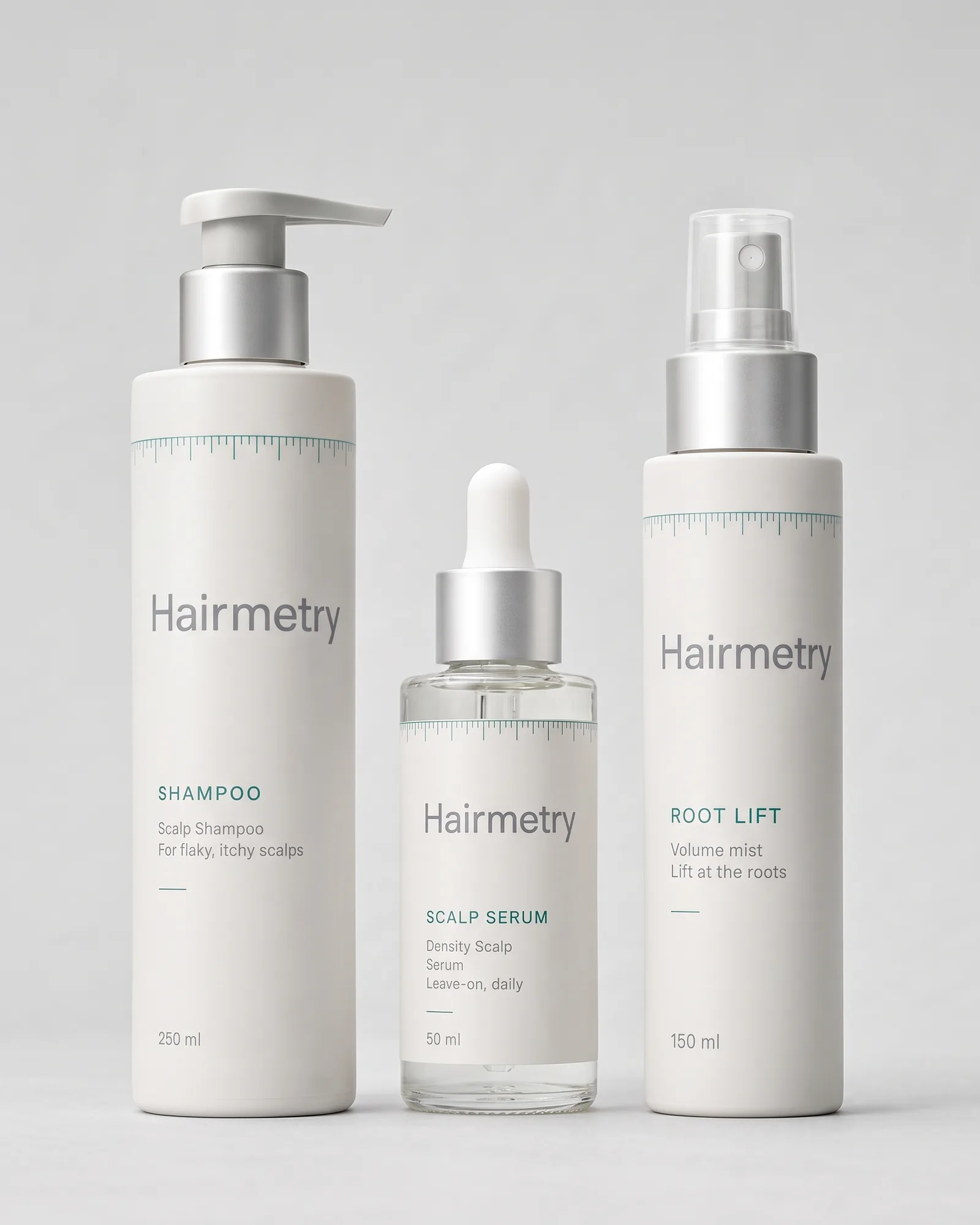
Routine · 3 products
Scalp and Density Routine
Scalp wash, density serum and root lift for a fuller-looking head
Scalp care plus styling for the look of more hair. These are cosmetics, not a hair loss treatment; for hair loss, talk to a doctor.
Save 15% at launch
Sets are cosmetics for hair and scalp. They do not treat disease. For hair loss, talk to a doctor.
Pairs well with
Read more
- Dandruff and itchy scalp, explainedDandruff is a reaction to a yeast, not dry skin or dirt. What works, how long to use it, and when to see a doctor.
- How often should you wash your hair?Wash when your scalp is oily, itchy or flaky. That is every 1 to 2 days for straight hair and about weekly for coily hair.
All studies behind this product (20)
Lodén M et al. The antidandruff efficacy of a shampoo containing piroctone olamine and salicylic acid in comparison to that of a zinc pyrithione shampoo. Int J Cosmet Sci. 2000
Tested: piroctone olamine 0.75% plus salicylic acid 2% versus zinc pyrithione 1% shampoo (double-blind, half-head)
Result: Both strongly cut dandruff; the piroctone olamine combination was slightly better on severity and area.
Read the study ↗Schmidt-Rose T et al. Efficacy of a piroctone olamine/climbazol shampoo in comparison with a zinc pyrithione shampoo in subjects with moderate to severe dandruff. Int J Cosmet Sci. 2011
Tested: piroctone olamine 0.5% plus climbazole 0.45% versus zinc pyrithione 1% (split-head)
Result: Comparable dandruff reduction and anti-fungal effect; 90% approved of the itch reduction with the piroctone olamine and climbazole shampoo.
Read the study ↗Piérard-Franchimont C, Goffin V, Henry F, Uhoda I, Braham C, Piérard GE. Nudging hair shedding by antidandruff shampoos. A comparison of 1% ketoconazole, 1% piroctone olamine and 1% zinc pyrithione formulations. Int J Cosmet Sci. 2002
Tested: 1% piroctone olamine, 1% ketoconazole or 1% zinc pyrithione shampoo, 2-3 washes a week
Result: All three cleared itch and dandruff. Hair density did not change. Shedding fell 16.5% with piroctone olamine, the share of growing (anagen) hairs rose 7.9% and hair shaft thickness rose 7.7%. No placebo arm.
Read the study ↗Davis MG, Piliang MP, Bergfeld WF et al. Scalp application of the antioxidant piroctone olamine reduces hair shedding in an 8-week randomized, double-blind, placebo-controlled clinical study. Int J Cosmet Sci. 2021
Tested: piroctone olamine shampoo or leave-on versus matching placebo (double-blind)
Result: Hair amount on phototrichogram rose versus placebo with both forms. The shampoo also lowered oxidative stress and improved scalp barrier and biomarker readings. Procter & Gamble study.
Read the study ↗Reygagne P, Piérard GE, Loussouarn G, Le Nôtre N, Ziane S. How I treat dandruff using a shampoo with a sulfate-free tensio-active. Rev Med Liege. 2016
Tested: 0.5% piroctone olamine in a shampoo with a sulfate-free surfactant system
Result: High anti-dandruff efficacy, fewer Malassezia (the yeast linked to dandruff), good lasting effect after washing, and slower return of greasy hair. Brief French-language report; abstract only.
Read the study ↗Hu P et al. Scalp microbiome composition changes and pathway evaluations due to effective treatment with Piroctone Olamine shampoo. Int J Cosmet Sci. 2024
Tested: piroctone olamine shampoo
Result: Flaking improved versus control; Malassezia restricta and Staphylococcus capitis fell, Cutibacterium acnes rose, and oxidative-stress, protease, urease and lipase gene signals fell. Industry-affiliated.
Read the study ↗Leyden JJ, McGinley KJ, Mills OH, Kyriakopoulos AA, Kligman AM. Effects of sulfur and salicylic acid in a shampoo base in the treatment of dandruff: a double-blind study using corneocyte counts and clinical grading. Cutis. 1987
Tested: 2% sulfur, 2% salicylic acid, both, or plain shampoo base, twice a week
Result: Scaling and shed-cell counts fell earlier and further with sulfur plus salicylic acid together than with either alone or the plain shampoo base.
Read the study ↗Otberg N, Teichmann A, Rasuljev U, Sinkgraven R, Sterry W, Lademann J. Follicular penetration of topically applied caffeine via a shampoo formulation. Skin Pharmacol Physiol. 2007
Tested: caffeine in a shampoo, left on for 2 minutes
Result: Caffeine got into the skin within 2 minutes. Entry through hair follicles was faster and higher than through the skin surface. This shows penetration only, not a hair benefit.
Read the study ↗Chen D et al. Anti-hair loss effect of a shampoo containing caffeine and adenosine. J Cosmet Dermatol. 2024
Tested: shampoo with 0.2% adenosine and 0.4% caffeine vs placebo shampoo (single-blind)
Result: Hair density rose and hair loss fell versus baseline; hair diameter did not change. Co-authors from the product company.
Read the study ↗Li F, Liu S, Han Z et al. The effects of caffeine and adenosine on the microbiome and lipidome of the scalp. Int J Cosmet Sci. 2025
Tested: shampoo with caffeine and adenosine, randomized single-blind parallel design
Result: Clinical signs of less hair loss at 12 weeks. Malassezia and some other microbes fell and Cutibacterium rose; scalp fat (lipid) profiles shifted. Small, single-blind.
Read the study ↗Schweiger D, Schoelermann AM, Filbry A, Hamann T, Moser C, Rippke F. Highly efficient and compatible shampoo for use after hair transplant. Clin Cosmet Investig Dermatol. 2015
Tested: perfume-free shampoo with a very mild surfactant system and bisabolol
Result: Scabbing and redness fell significantly, rated by the surgeons and by the volunteers. The effect belongs to the whole formula, not to bisabolol alone. Company-run study.
Read the study ↗Nicander I, Rantanen I, Rozell BL, Söderling E, Ollmar S. The ability of betaine to reduce the irritating effects of detergents assessed visually, histologically and by bioengineering methods. Skin Res Technol. 2003
Tested: sodium lauryl sulfate or cocamidopropyl betaine with and without betaine
Result: Adding betaine lowered the irritant reaction to both detergents. Short patch test on forearm skin, not a shampoo trial.
Read the study ↗Locker KCS et al. Understanding the dandruff flare-up: A cascade of measurable and perceptible changes to scalp health. Int J Cosmet Sci. 2025
Result: Biomarker deterioration (Malassezia load, barrier disruption, inflammatory and oxidative markers) appeared after about 3 days and visible flaking after about 3 weeks. Randomized double-blind; industry study.
Read the study ↗Proksch E, Nissen HP. Dexpanthenol enhances skin barrier repair and reduces inflammation after sodium lauryl sulphate-induced irritation. J Dermatolog Treat. 2002
Tested: dexpanthenol cream versus plain cream vehicle, twice daily
Result: Barrier repair and hydration improved faster and redness fell more with the dexpanthenol cream than with the vehicle. A leave-on cream on skin, not a rinse-off shampoo.
Read the study ↗Marsh JM et al. Strengthening benefits of panthenol for hair: mechanistic evidence from advanced spectroscopic techniques. Int J Cosmet Sci. 2026
Result: Labelled panthenol penetrated into cortical protein regions and raised break stress and elastic modulus, probably through hydrogen bonding.
Read the study ↗Scott LN, Fiume M, Bergfeld WF et al. Safety assessment of panthenol, pantothenic acid, and derivatives as used in cosmetics. Int J Toxicol. 2022
Result: The Cosmetic Ingredient Review panel judged panthenol and pantothenic acid safe as used in cosmetics, where they act as hair conditioners and humectants.
Read the study ↗Hossel P et al. Conditioning polymers in today's shampoo formulations: efficacy, mechanism and test methods. Int J Cosmet Sci. 2000
Result: Polyquaternium-7, polyquaternium-10 and cationic guar all improved combing, but differed in build-up and removability.
Read the study ↗Burnett CL, Bergfeld WF, Belsito DV et al. Safety assessment of tetrasodium glutamate diacetate and beta-alanine diacetic acid as used in cosmetics. Int J Toxicol. 2025
Result: The Cosmetic Ingredient Review panel judged tetrasodium glutamate diacetate (GLDA), a chelator that binds metal ions, safe as used in cosmetics.
Read the study ↗Dréno B, Zuberbier T, Gelmetti C, Gontijo G, Marinovich M. Safety review of phenoxyethanol when used as a preservative in cosmetics. J Eur Acad Dermatol Venereol. 2019
Result: Phenoxyethanol is a rare sensitizer with only a weak effect on skin's own microbes. EU experts judge it safe for all consumers, children included, at up to 1% as a preservative.
Read the study ↗Gavazzoni Dias MF et al. The Shampoo pH can Affect the Hair: Myth or Reality? Int J Trichology. 2014
Result: 38% were at or below pH 5.5 and 62% above; 81% of 26 anti-dandruff shampoos and all children's shampoos were above 5.5 (range 3.5-9.0). Alkaline pH may raise fibre charge, friction and cuticle damage; a measurement and mechanism review, not a wear trial.
Read the study ↗