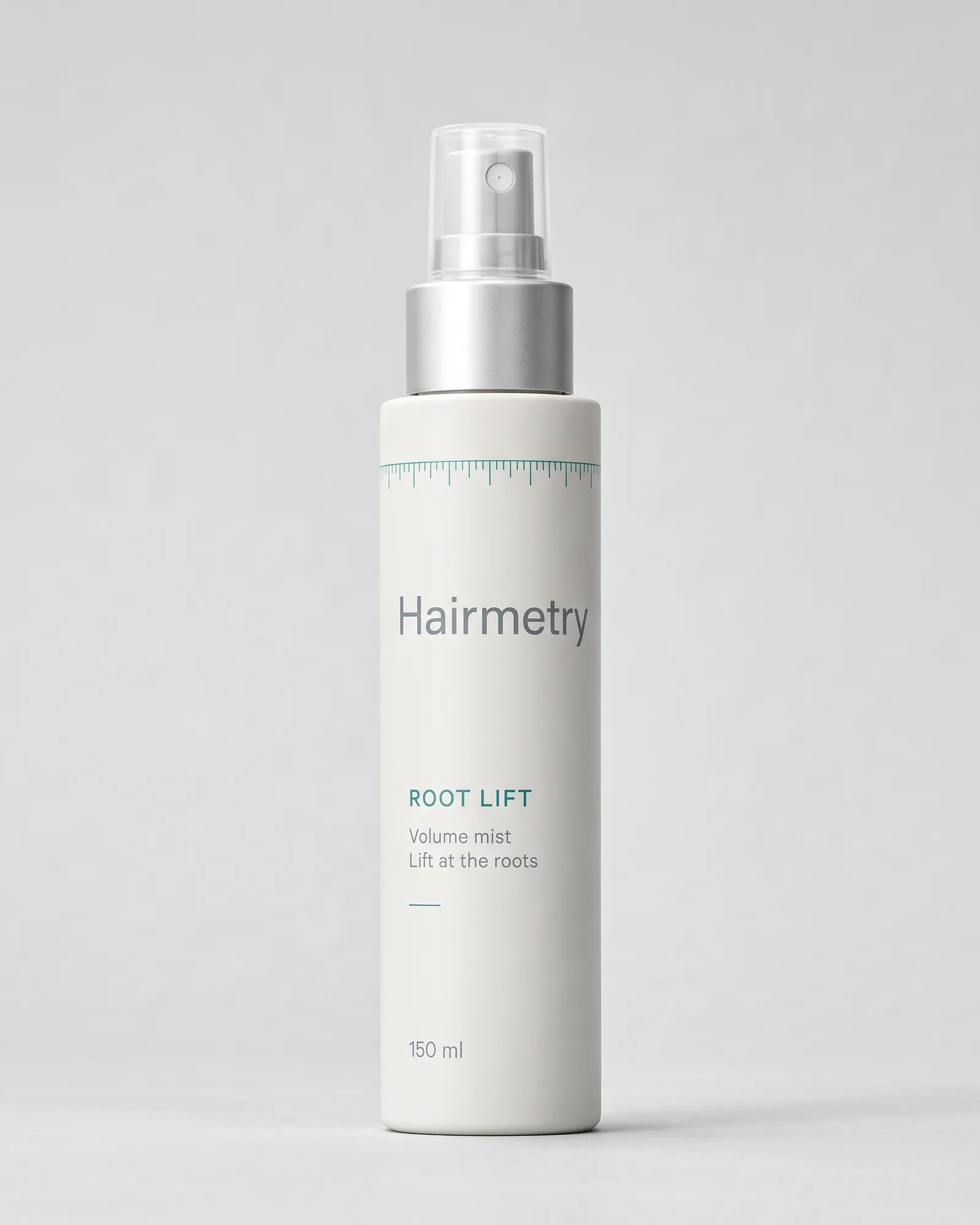
Concept render, product in development
In development · not for sale yet
Hairmetry
Root Lift Spray 150 ml
Light polymer mist for lift and body at the roots
- straight hair
- wavy hair
- curly hair
- oily scalp
- balanced scalp
- dry scalp
- low volume
- flat hair
Free tester with 2 or more products. Checkout opens at launch.
Prices are set at launch.
- How often
- Whenever you style
- You notice it
- Same day, once styled
- Every key ingredient links to a study
- No fragrance
Why it works
-
VP/VA copolymer (hold polymer)
Dries into a light film that stiffens hair at the root. A BASF stiffness test covered it, but lab stiffness matched panel hold only for gels.
-
VP/acrylates/lauryl methacrylate copolymer
Cut combing breakage after repeated flat ironing above 200 C in a 2011 supplier lab test on cut hair. Not tested for root lift.
-
Hydrolyzed wheat protein
studied at 2%, with wheat starch
Raised dry-hair strength in a lab test on damaged hair. Wheat-derived: skip it if you react to wheat.
-
Panthenol (pro-vitamin B5)
A small molecule that enters hair and probably binds to its protein. In a Procter and Gamble lab test it raised break stress and stiffness.
How to use it
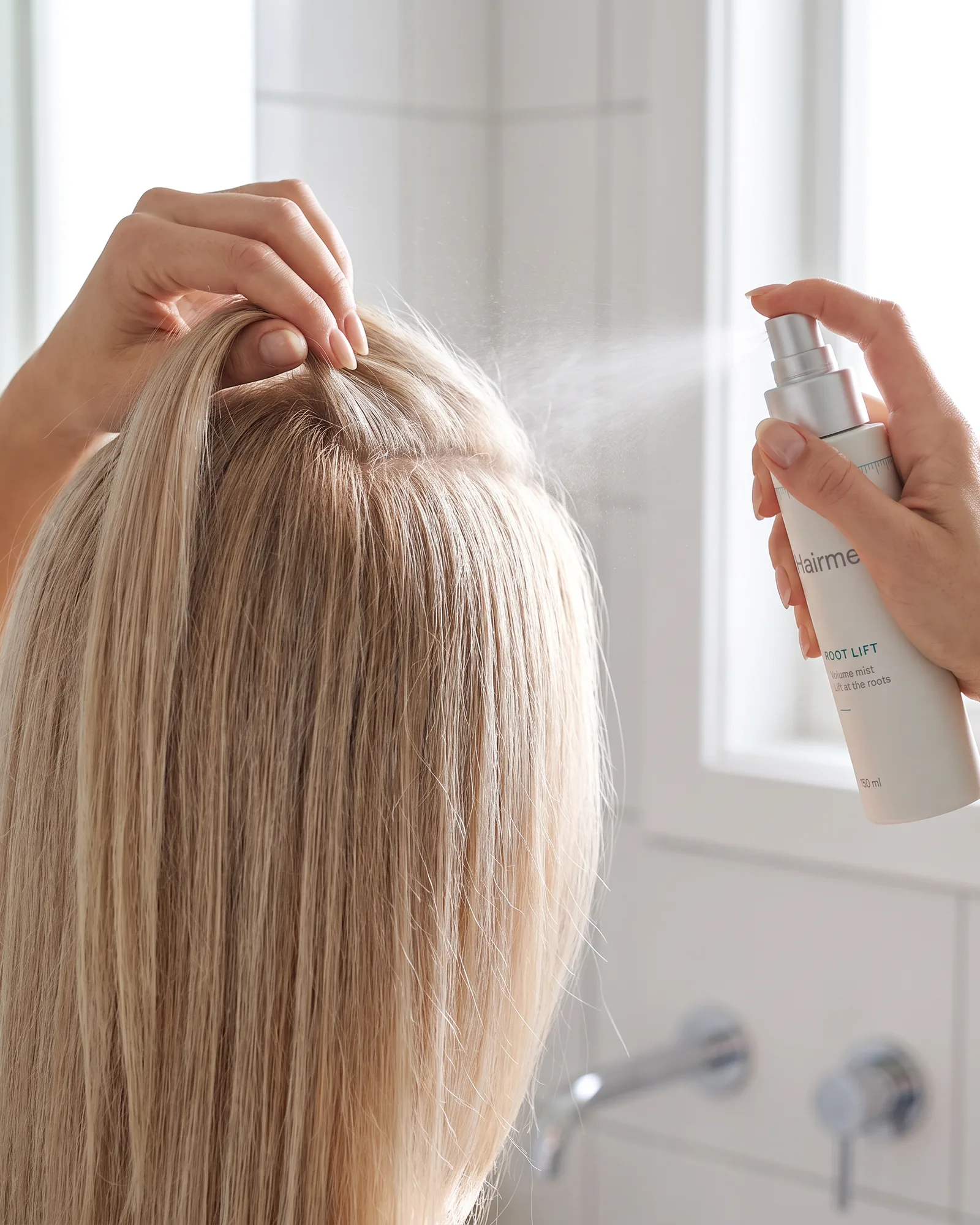
- 1On towel-dried hair, lift sections and mist the roots from 15 cm.
- 2Blow-dry the roots upward on low heat until fully dry.
What's not in it
Added fragrance and fragrance allergens
Fragrance is a main cause of contact allergy. In one clinic series, 15.7% of dermatitis patients reacted to a fragrance. Linalool and limonene appear in about half of fragranced products.
Essential oils
Natural does not mean gentle. In 62,354 patch-tested clinic patients, 1.4% reacted to an essential oil alone. Ylang-ylang, sandalwood, jasmine, peppermint and oxidised tea tree oil led.
MI / MCI preservatives
MI drove a rise in contact allergy in Europe. EU banned it from leave-ons in 2017; rinse-off is capped at 15 ppm. About 3 in 100 tested patients react.
Formaldehyde-releasing preservatives
These preservatives slowly release formaldehyde, a known skin allergen. A 2022 clinical review says they still cause dermatitis, sometimes without being listed on the label.
Zinc pyrithione
Banned in EU cosmetics from March 2022 as toxic for reproduction (hazard class). EU experts judged it safe in rinse-off anti-dandruff shampoo up to 1%, but no exemption was granted.
Drying alcohol in leave-ons
In 15 volunteers, strong alcohols lowered skin hydration without breaking the barrier. A mild effect, so a caution for dry or sensitive scalps. Fatty alcohols like cetyl alcohol are fine.
Coal tar
Coal tar can cause folliculitis, irritation and allergy, and contains carcinogens seen in animals and workers (patients show no clear tumour rise). A non-tar shampoo matched it in one trial.
Methyldibromo glutaronitrile
A preservative the EU banned in all cosmetics because allergy kept rising. In Denmark, positive allergy tests fell from 4.6% to 2.6% after the ban.
Full ingredient list (proposed formula)
Aqua, VP/VA Copolymer, VP/Acrylates/Lauryl Methacrylate Copolymer, Hydrolyzed Wheat Protein, Panthenol, Phenoxyethanol, Ethylhexylglycerin, Aminomethyl Propanol
A proposed formula for a product in development. Final levels are set by a cosmetic chemist and tested for stability and safety before any sale.
Frequently asked
How often can I use it?
Whenever you style.
Is it right for my hair type?
It is made for straight, wavy, curly hair. The Best for tags at the top list the scalp types and concerns it suits.
When will I notice a difference?
Same day, once styled.
Does it contain fragrance?
No. It has no added fragrance or essential oils, and the full ingredient list is on this page.
Is it medicine?
No. It is a cosmetic that cares for hair and scalp. It does not treat disease. For hair loss, talk to a doctor.
Can I buy it yet?
Not yet. It is in development, so the formula can still change. Checkout opens at launch.
Root Lift Spray 150 ml
Complete the routine
Routine · 3 products
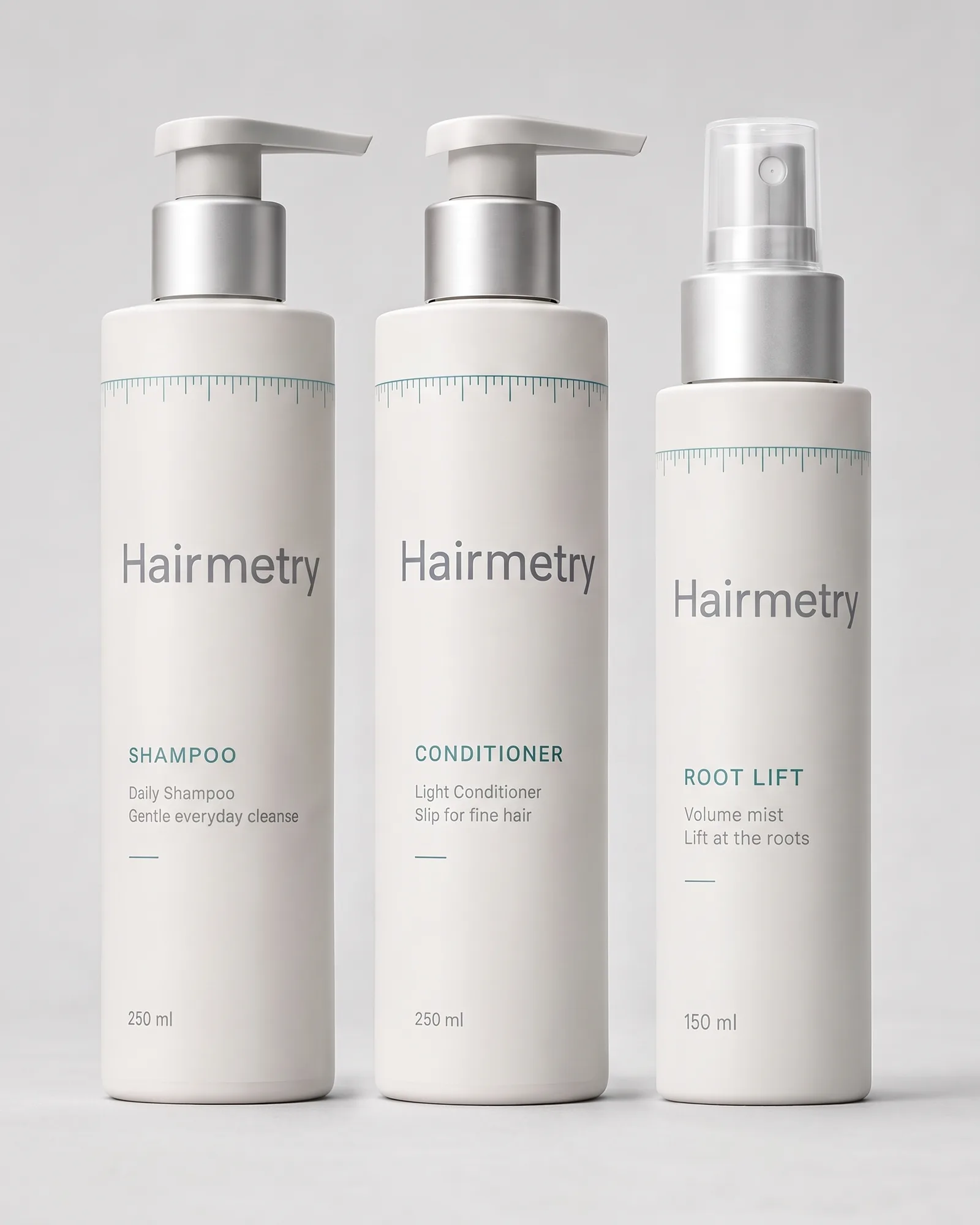
Fuller Look Routine
Shampoo, conditioner and root lift for hair that sits flat
A light wash and conditioner that do not weigh hair down, plus a spray that lifts at the roots.
Save 15% at launch
Routine · 3 products
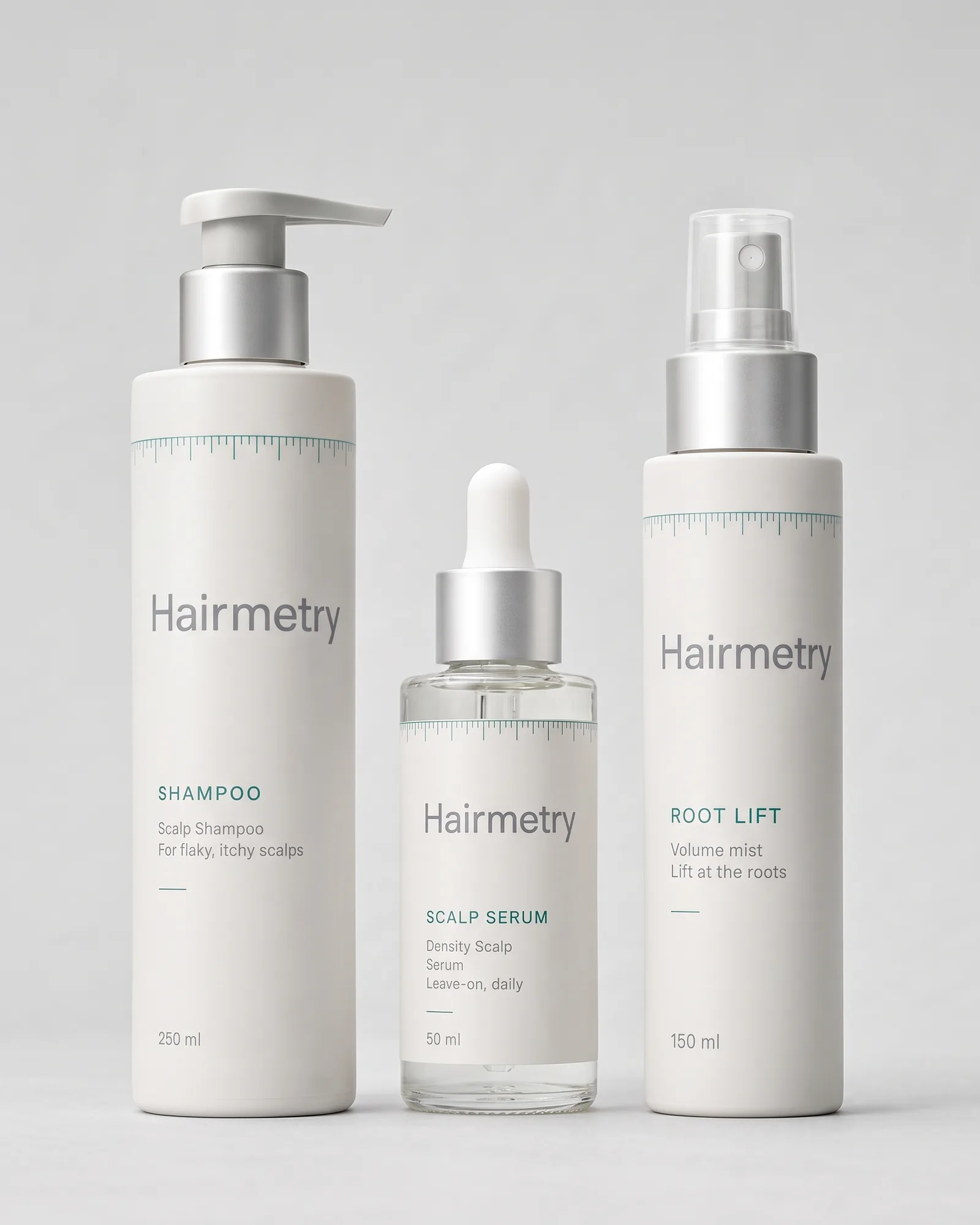
Scalp and Density Routine
Scalp wash, density serum and root lift for a fuller-looking head
Scalp care plus styling for the look of more hair. These are cosmetics, not a hair loss treatment; for hair loss, talk to a doctor.
Save 15% at launch
Sets are cosmetics for hair and scalp. They do not treat disease. For hair loss, talk to a doctor.
Read more
All studies behind this product (7)
Hoessel P et al. Assessment of styling performance in hair gels and hair sprays by means of a new two-point stiffness test. J Cosmet Sci. 2010
Tested: commercial styling polymers including PVP, VP/VA copolymers and several acrylates
Result: A stiffness test on treated strands matched panel ratings for gels but not for hair sprays, so lab stiffness predicts hold only partly.
Read the study ↗Petter PJ. Acetylene-derived polymers and their applications in hair and skin care. Int J Cosmet Sci. 1989
Tested: vinylpyrrolidone polymers and copolymers in hair care
Result: Industry review: PVP was the first synthetic hairspray resin; describes the vinylpyrrolidone copolymer classes (with vinyl acetate, DMAEMA and others) used in hair care.
Read the study ↗Zhou Y et al. The effect of various cosmetic pretreatments on protecting hair from thermal damage by hot flat ironing. J Cosmet Sci. 2011
Tested: pretreatment with VP/acrylates/lauryl methacrylate copolymer, polyquaternium-55, or a PVM/MA plus polyquaternium-28 complex before ironing
Result: Heat changed the protein structure and raised combing breakage; the three polymer pretreatments cut breakage significantly and protected keratin in the cortex and the cuticle surface.
Read the study ↗Daniels G, Nicholson S, Grant-Ross P, Tamburic S. An ex vivo comparison of the tensile-strengthening properties of protein derivatives on damaged hair. IFSCC Magazine. 2016
Tested: cationic emulsion base (1% cetrimonium chloride) with hydrolysed keratin 0.5%, hydrolysed wheat protein plus wheat starch 2%, or hydrolysed collagen 2%
Result: All three proteins raised wet breaking force on all three damage types, keratin most; wheat protein plus starch gave the biggest gain in dry hair, especially bleached or heat-straightened; small university study, one hair source.
Read the study ↗Burnett C et al. Safety assessment of hydrolyzed wheat protein and hydrolyzed wheat gluten as used in cosmetics. Int J Toxicol. 2018
Result: The Cosmetic Ingredient Review panel judged hydrolysed wheat protein safe in cosmetics when average molecular weight is 3,500 Da or less.
Read the study ↗Marsh JM et al. Strengthening benefits of panthenol for hair: mechanistic evidence from advanced spectroscopic techniques. Int J Cosmet Sci. 2026
Result: Labelled panthenol penetrated into cortical protein regions and raised break stress and elastic modulus, probably through hydrogen bonding.
Read the study ↗Scott LN, Fiume M, Bergfeld WF et al. Safety assessment of panthenol, pantothenic acid, and derivatives as used in cosmetics. Int J Toxicol. 2022
Result: The Cosmetic Ingredient Review panel judged panthenol and pantothenic acid safe as used in cosmetics, where they act as hair conditioners and humectants.
Read the study ↗