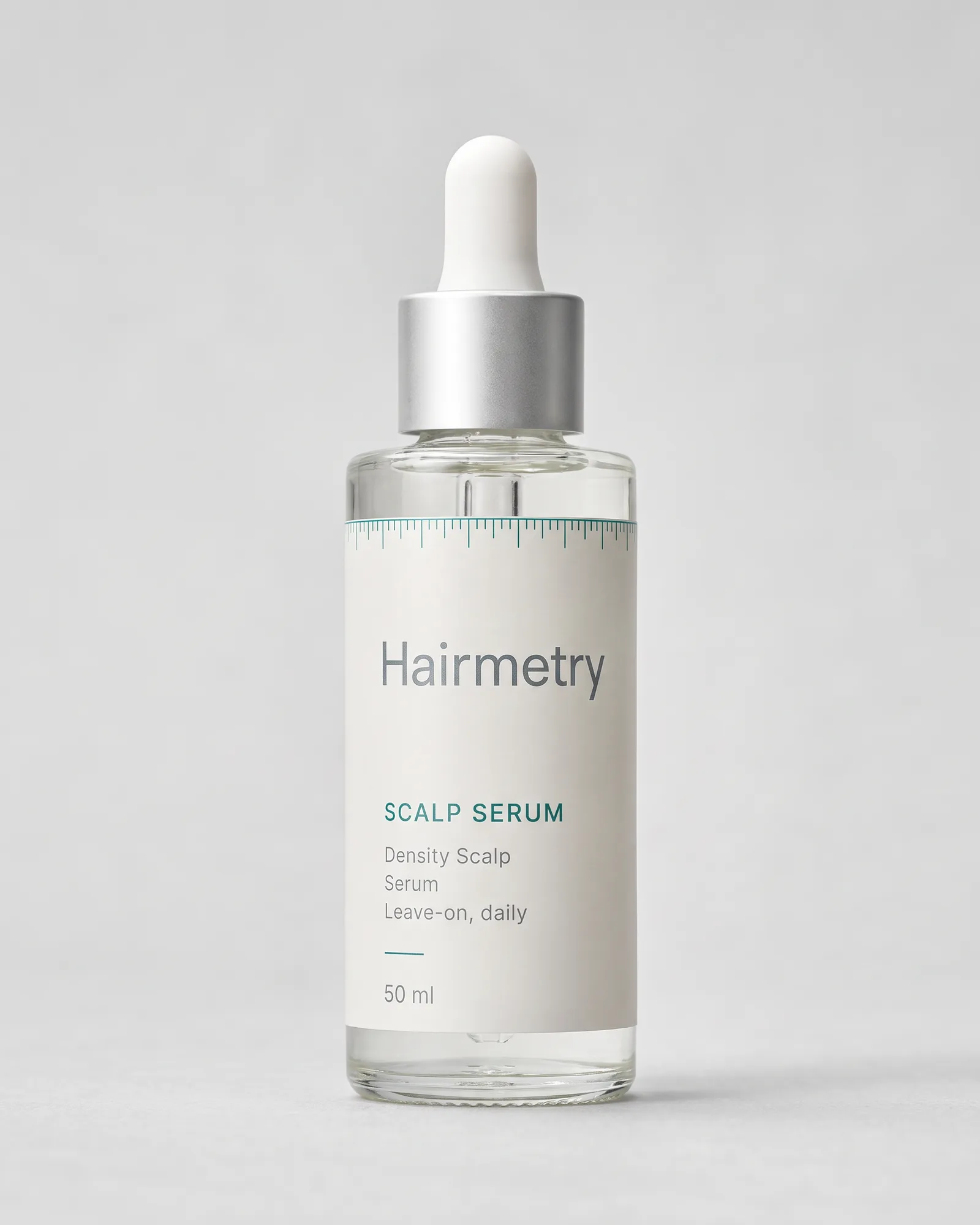
Concept render, product in development
In development · not for sale yet
Hairmetry
Density Scalp Serum 50 ml
A gentle leave-on serum to support thinning-looking hair
- straight hair
- wavy hair
- curly hair
- coily hair
- oily scalp
- balanced scalp
- dry scalp
- hair loss
- receding hairline
- thinning
- shedding
- slow growth
Free tester with 2 or more products. Checkout opens at launch.
Prices are set at launch.
- How often
- Once or twice daily
- You notice it
- Give it 4 to 6 months
- Every key ingredient links to a study
- No fragrance
Why it works
-
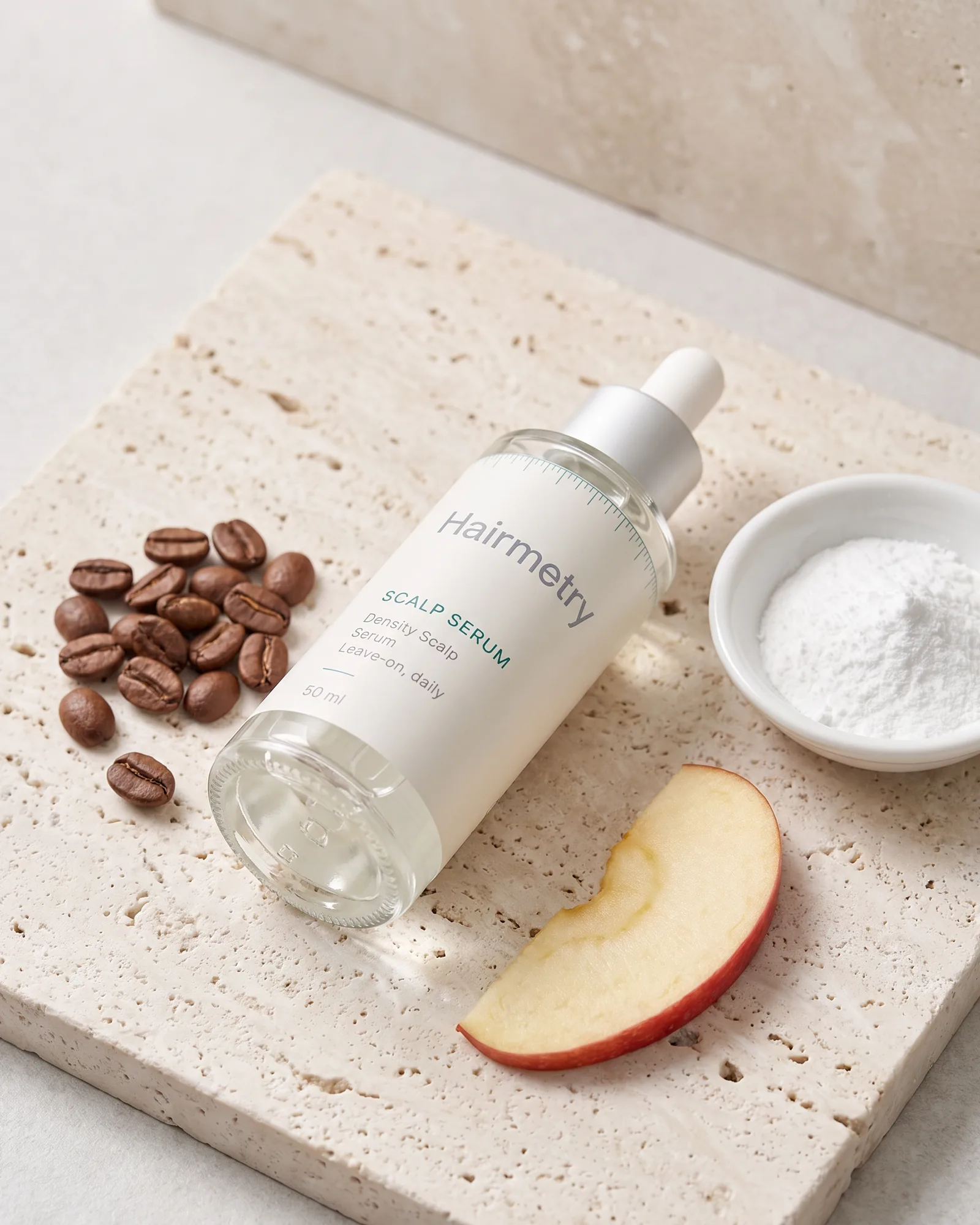
Caffeine
studied at 0.2%
Lengthened hair shafts of follicles grown in a dish. In 210 men over 6 months, a 0.2% caffeine liquid raised the share of growing hairs 10.6%. No placebo; maker-funded.
-
Adenosine
studied at 0.75%
In placebo-controlled trials, 0.75% adenosine lotion raised the share of thick hairs, mostly in maker-linked studies. Pooling three trials at 6 months found no significant gain.
-
Niacinamide (vitamin B3)
studied at 2%, with adenosine and panthenol
Part of the adenosine complex studied in 46 people: density rose 6.2% and thickness 10.3% in 4 months. Company-run and small. Niacinamide is judged safe in cosmetics.
-
Panthenol (pro-vitamin B5)
studied at 1%, in the complex
The third part of the same studied complex with adenosine and niacinamide. Evidence is for the blend, not panthenol alone.
-
Apple procyanidin B-2
studied as 1% purified procyanidin B-2, not whole apple extract
In 29 men over 6 months, a 1% procyanidin B-2 tonic added 6.7 hairs per 0.25 cm2 versus 0.1 with placebo. Authors worked for the maker.
-
Acetyl tetrapeptide-3 and red clover
In 32 people over 24 weeks, a blend of this peptide, biochanin A (also found in red clover) and ginseng raised terminal hair count 8.3%. No placebo group.
How to use it
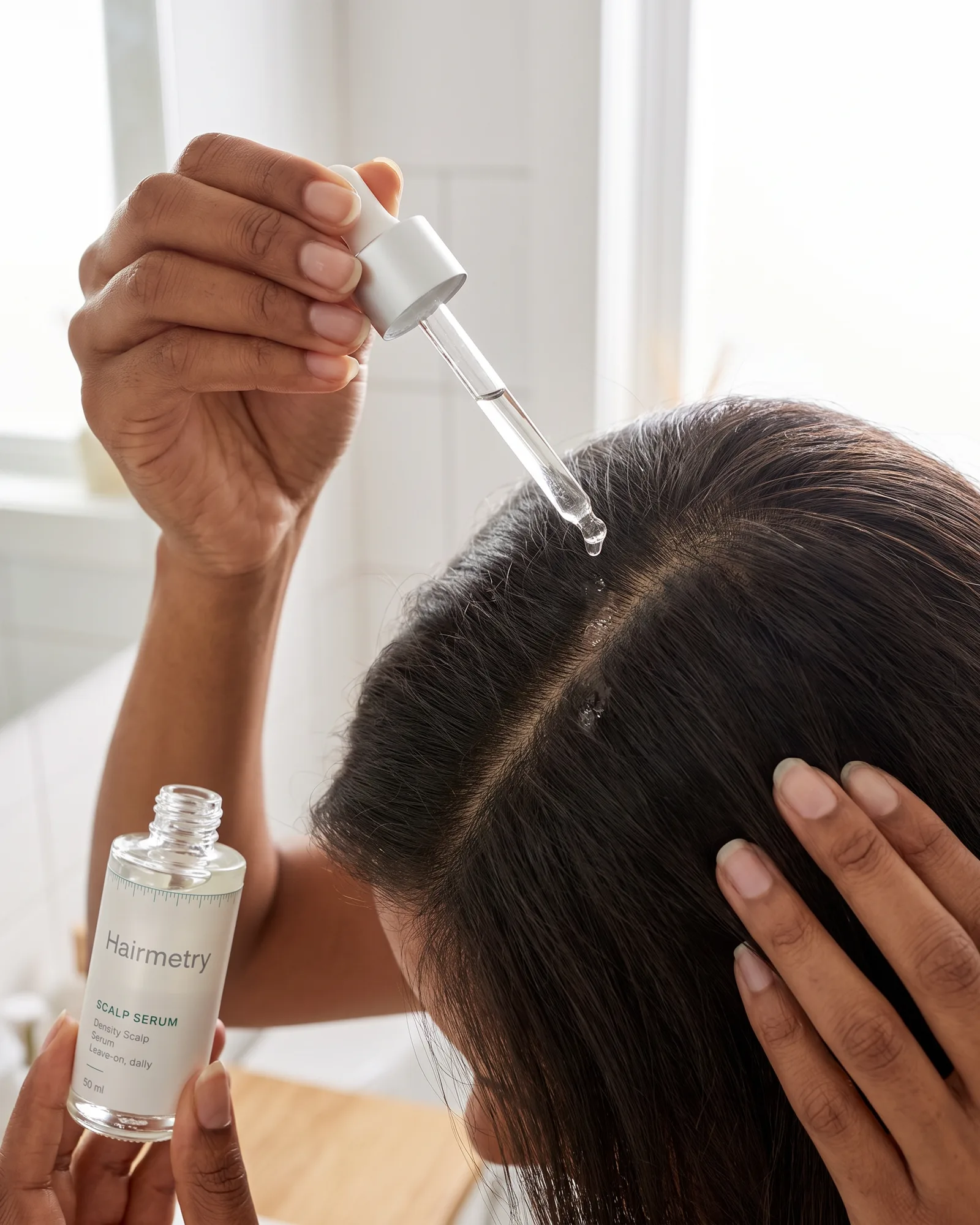
- 1Part the hair and apply 1 mL to clean, dry scalp.
- 2Massage in with fingertips for a minute. Do not rinse.
- 3For hair loss, talk to a doctor about proven options.
What's not in it
Added fragrance and fragrance allergens
Fragrance is a main cause of contact allergy. In one clinic series, 15.7% of dermatitis patients reacted to a fragrance. Linalool and limonene appear in about half of fragranced products.
Essential oils
Natural does not mean gentle. In 62,354 patch-tested clinic patients, 1.4% reacted to an essential oil alone. Ylang-ylang, sandalwood, jasmine, peppermint and oxidised tea tree oil led.
MI / MCI preservatives
MI drove a rise in contact allergy in Europe. EU banned it from leave-ons in 2017; rinse-off is capped at 15 ppm. About 3 in 100 tested patients react.
Formaldehyde-releasing preservatives
These preservatives slowly release formaldehyde, a known skin allergen. A 2022 clinical review says they still cause dermatitis, sometimes without being listed on the label.
Zinc pyrithione
Banned in EU cosmetics from March 2022 as toxic for reproduction (hazard class). EU experts judged it safe in rinse-off anti-dandruff shampoo up to 1%, but no exemption was granted.
Harsh sulfates in daily products
SLS is the standard irritant control in skin patch tests. A gentler cleanser, sodium lauroyl glutamate, irritated far less in 15 people. Fine for an occasional deep clean, not daily.
Drying alcohol in leave-ons
In 15 volunteers, strong alcohols lowered skin hydration without breaking the barrier. A mild effect, so a caution for dry or sensitive scalps. Fatty alcohols like cetyl alcohol are fine.
Coal tar
Coal tar can cause folliculitis, irritation and allergy, and contains carcinogens seen in animals and workers (patients show no clear tumour rise). A non-tar shampoo matched it in one trial.
Methyldibromo glutaronitrile
A preservative the EU banned in all cosmetics because allergy kept rising. In Denmark, positive allergy tests fell from 4.6% to 2.6% after the ban.
Full ingredient list (proposed formula)
Aqua, Propanediol, Glycerin, Niacinamide, Panthenol, Phenoxyethanol, Adenosine, Hydroxyethylcellulose, Caffeine, Ethylhexylglycerin, Malus Domestica Fruit Extract, Trifolium Pratense Flower Extract, Acetyl Tetrapeptide-3, Sodium Citrate, Citric Acid
A proposed formula for a product in development. Final levels are set by a cosmetic chemist and tested for stability and safety before any sale.
Frequently asked
How often can I use it?
Once or twice daily.
Is it right for my hair type?
It is made for straight, wavy, curly, coily hair. The Best for tags at the top list the scalp types and concerns it suits.
When will I notice a difference?
Give it 4 to 6 months.
Does it contain fragrance?
No. It has no added fragrance or essential oils, and the full ingredient list is on this page.
Is it medicine?
No. It is a cosmetic that cares for hair and scalp. It does not treat disease. For hair loss, talk to a doctor.
Can I buy it yet?
Not yet. It is in development, so the formula can still change. Checkout opens at launch.
Density Scalp Serum 50 ml
Complete the routine
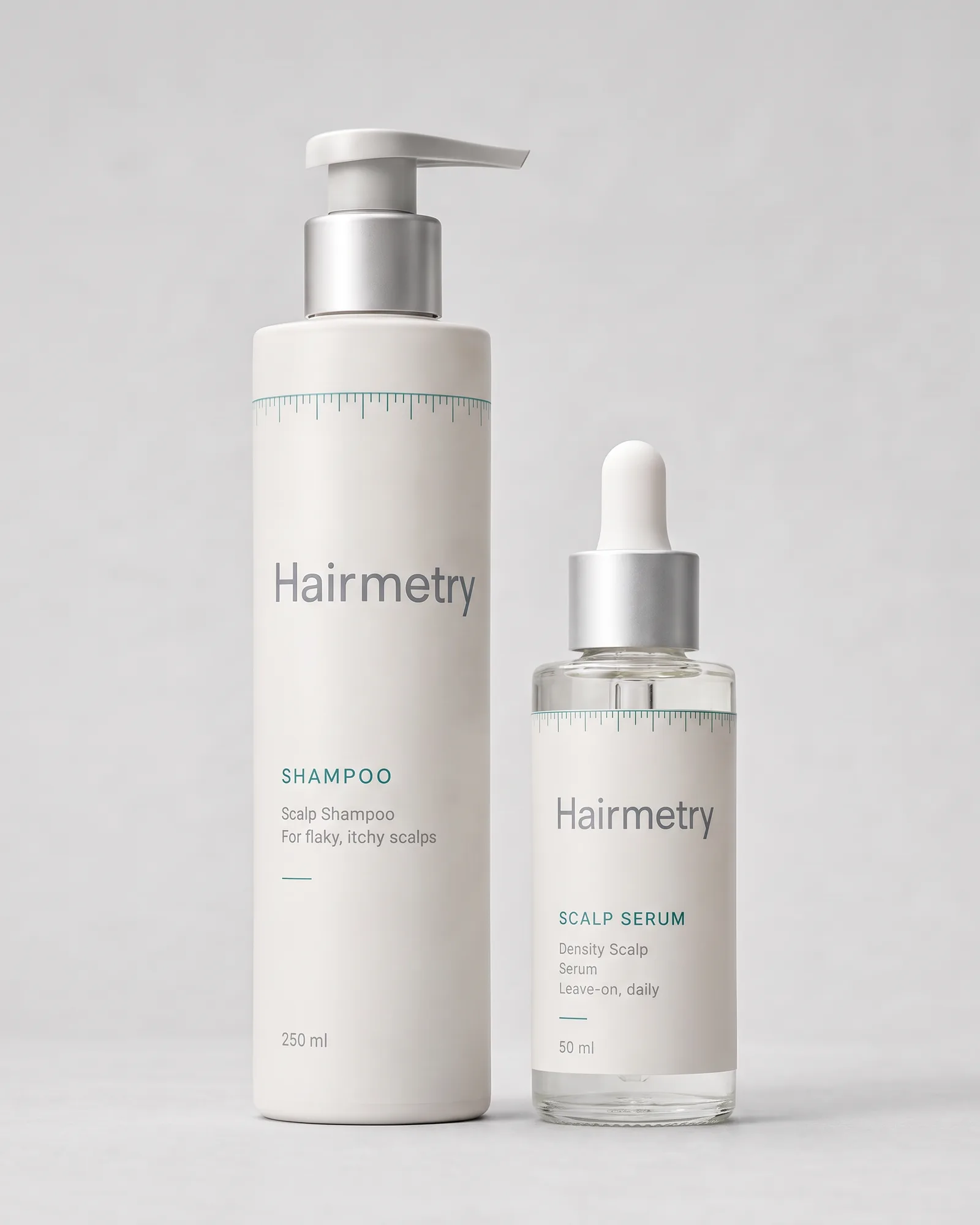
Duo · 2 products
Scalp Duo
Scalp Shampoo and Density Serum for a well-kept scalp
A cosmetic scalp wash and a leave-on serum for scalp care. Neither treats hair loss; for hair loss, talk to a doctor.
Save 10% at launch
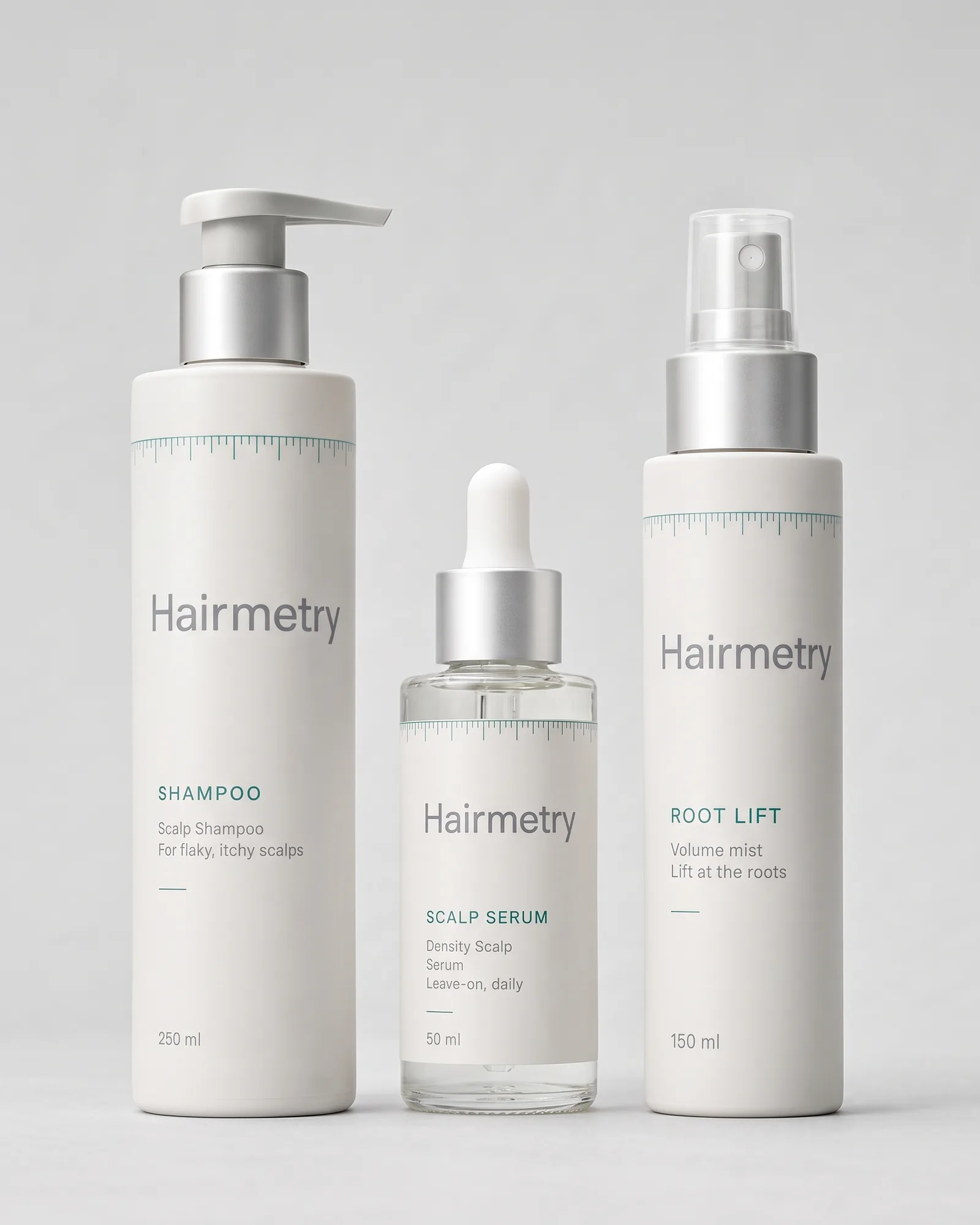
Routine · 3 products
Scalp and Density Routine
Scalp wash, density serum and root lift for a fuller-looking head
Scalp care plus styling for the look of more hair. These are cosmetics, not a hair loss treatment; for hair loss, talk to a doctor.
Save 15% at launch
Sets are cosmetics for hair and scalp. They do not treat disease. For hair loss, talk to a doctor.
Pairs well with
Read more
All studies behind this product (10)
Dhurat R et al. An open-label randomized multicenter study assessing the noninferiority of a caffeine-based topical liquid 0.2% versus minoxidil 5% solution in male androgenetic alopecia. Skin Pharmacol Physiol. 2017
Tested: 0.2% caffeine liquid vs 5% minoxidil solution, no placebo arm
Result: Anagen ratio rose 10.59% with caffeine vs 11.68% with minoxidil, within the 5% non-inferiority margin. Open-label and sponsored by the manufacturer.
Read the study ↗Fischer TW et al. Differential effects of caffeine on hair shaft elongation, matrix and outer root sheath keratinocyte proliferation, and TGF-beta2/IGF-1-mediated regulation of the hair cycle in male and female human hair follicles in vitro. Br J Dermatol. 2014
Tested: caffeine 0.0005-0.005%
Result: Longer hair shaft and anagen, more matrix cell proliferation, lower TGF-beta2 and higher IGF-1; female follicles responded more strongly than male.
Read the study ↗Szendzielorz E, Spiewak R. Caffeine as an active ingredient in cosmetic preparations against hair loss: a systematic review of available clinical evidence. Healthcare (Basel). 2025
Tested: topical caffeine products
Result: All 9 trials favoured caffeine, but certainty was medium in 3, low in 1 and very low in 5; concentration was disclosed in only 2 trials.
Read the study ↗Oura H et al. Adenosine increases anagen hair growth and thick hairs in Japanese women with female pattern hair loss: a pilot, double-blind, randomized, placebo-controlled trial. J Dermatol. 2008
Tested: 0.75% adenosine lotion twice daily vs placebo
Result: Adenosine beat placebo on dermatologist, investigator and self-assessment and raised the share of thick hairs; no side effects.
Read the study ↗Iwabuchi T et al. Topical adenosine increases the proportion of thick hair in Caucasian men with androgenetic alopecia. J Dermatol. 2016
Tested: adenosine lotion vs placebo
Result: Share of thick hairs rose versus placebo (P<0.0001) and density improved (P=0.047). Shiseido authors.
Read the study ↗Szendzielorz E, Spiewak R. Adenosine as an active ingredient in topical preparations against hair loss: a systematic review and meta-analysis of published clinical trials. Biomolecules. 2025
Tested: adenosine products, mostly 0.75% lotion
Result: All 7 trials were positive but certainty was very low to moderate; pooling 3 trials of the lotion at 6 months was not significant for density (OR 1.03) or thick hairs (OR 1.4).
Read the study ↗Kim J et al. Hair thickness growth effect of adenosine complex in male-/female-patterned hair loss via inhibition of androgen receptor signaling. Int J Mol Sci. 2024
Tested: 0.75% adenosine with 1% panthenol and 2% niacinamide vs 5% minoxidil
Result: Density rose 6.20% with the complex vs 5.01% with minoxidil, thickness 10.32% vs 5.14%. Industry authors; also lab work on androgen-receptor signalling.
Read the study ↗Cosmetic Ingredient Review Expert Panel. Final report of the safety assessment of niacinamide and niacin. Int J Toxicol. 2005
Tested: niacinamide and niacin in cosmetics
Result: Judged safe as used in cosmetics, with no significant irritation, sensitization or photosensitization in clinical testing at up to 5%.
Read the study ↗Kamimura A, Takahashi T, Watanabe Y. Topical procyanidin B-2 from apple as a hair growing agent. Phytomedicine. 2000
Tested: 1% procyanidin B-2 tonic (19 men) vs placebo (10 men)
Result: Total hairs rose by 6.68 vs 0.08 per 0.25 cm2 (p<0.005); terminal hairs +1.99 vs -0.82 (p<0.02). Authors worked at the maker.
Read the study ↗Lueangarun S, Panchaprateep R. An herbal extract combination (biochanin A, acetyl tetrapeptide-3, and ginseng extracts) versus 3% minoxidil solution for the treatment of androgenetic alopecia: a 24-week prospective, randomized, triple-blind, controlled trial. J Clin Aesthet Dermatol. 2020
Tested: 1 mL twice daily of biochanin A, acetyl tetrapeptide-3 and ginseng blend vs 3% minoxidil, no placebo arm
Result: Terminal hair count rose 8.3% with the blend vs 8.7% with minoxidil, no significant difference; no local reactions with the blend, one eczema case with minoxidil.
Read the study ↗